Slab Leak Detection
Warm spots on your floor or a sudden spike in your water bill? We locate leaks under concrete slabs with acoustic sensors and thermal imaging — no jackhammer guesswork.
Slab Leak Detection in Camden, NJMerchantville is a Victorian borough in half a square mile — antique shops on Maple Avenue, historic districts, and pre-war homes packed close together. Musty closet? Stained ceiling?A water bill that climbed for no clear reason?We come equipped with acoustic gear and thermal cameras and track the leak down without disturbing the house. Call (856) 245-0967.
From Camden to Merchantville — the same service list:
Warm spots on your floor or a sudden spike in your water bill? We locate leaks under concrete slabs with acoustic sensors and thermal imaging — no jackhammer guesswork.
Slab Leak Detection in Camden, NJWe trace leaks in buried water and main lines between your meter and your home, marking the exact spot so repairs stay small and affordable.
Underground Main Line Detection in Camden, NJDamp patches, bubbling paint, or musty smells? Our moisture scans find hidden leaks inside walls and ceilings before mold takes hold.
Interior Wall & Ceiling Detection in Camden, NJLosing more water than evaporation explains? We pressure-test plumbing and scan pool shells to find pool and spa leaks fast — saving water and chemicals.
Pool & Spa Leak Detection in Camden, NJProtect your building and your tenants. We inspect commercial properties for hidden leaks that drive up utility bills and risk structural damage.
Commercial Leak Detection in Camden, NJWe detect natural gas line leaks and HVAC refrigerant leaks with sensitive electronic detectors. Smell gas? Leave the property and call 911 first — then call us.
Gas & HVAC Refrigerant Detection in Camden, NJOur ultra-sensitive ground microphones hear leaks you can't — pinpointing pressurized pipe leaks under soil, concrete, and asphalt.
Acoustic Leak Detection in Camden, NJInfrared cameras reveal temperature differences caused by hidden moisture, letting us map leaks behind surfaces without opening them.
Thermal Imaging Leak Detection in Camden, NJFor the toughest leaks, we introduce a safe tracer gas into the line and track it to the exact escape point — accurate to within inches.
Tracer Gas Leak Detection in Camden, NJSoggy yard spots or sewage odors? We locate breaks and leaks in sewer lines so you fix the right section the first time.
Sewer Line Leak Detection in Camden, NJActive leak causing damage right now? Call (856) 245-0967 — we prioritize urgent leak calls across Camden, NJ.
Emergency Leak Detection in Camden, NJSummer bill spike but the house is dry? We test each sprinkler zone at the meter, check valves and the manifold, and mark the broken lateral before anyone digs — one small patch of lawn, not a trench across it.
Irrigation Leak Detection in Camden, NJTenant reported a stain, or a bill spiked on one property among many? We pinpoint the leak and document it with a written report, moisture map, and photos your owner or insurer can act on.
Property Manager Leak Detection in Camden, NJFind the full service list on our home page.
Merchantville packs a lot of history into 0.59 square miles: incorporated in 1874 and named by four merchants, it holds the Cattell Tract and The Oaks historic districts, Wellwood Park, a Town Center, and the Maple Avenue antique district, with the Merchantville Country Club dating to 1898. The homes are largely pre-war, many of them Victorian in style, standing close together on small lots.
We do leak detection Merchantville-wide — from the Cattell Tract and The Oaks historic districts, to Wellwood Park and Town Center, to Maple Avenue and Chestnut Station.Wherever your home sits, the plumbing story is much the same: pipes installed decades ago, in homes built to last.
Merchantville falls in ZIP code 08109 — most visits scheduled same-day or next-day. Call (856) 245-0967.
We also serve nearby Camden County towns: Clementon, Haddon Township, Audubon, and Oaklyn.
Merchantville homes are beautiful — but let's be honest about the plumbing.Many homes here still run original supply lines — pipe whose rated life those homes passed years ago. Pinhole leaks are the classic Merchantville call: a fine spray inside a wall you can't see, slowly soaking everything around it. On a Victorian or pre-war house, the original galvanized lines are living on borrowed time.
Plaster-and-lath walls make it trickier. Water doesn't drip straight down — it travels along the lath and shows up as a stain rooms away from the actual leak. Chasing the stain means opening the wrong wall — and in a historic-district home, the wrong wall is irreplaceable woodwork and plaster.Thermal imaging follows the moisture trail back to its source — that is the entire point of professional leak detection.
Don't forget the trees. Merchantville's mature street trees are lovely to look at and ruthless to old clay sewer laterals — roots chase water and break in. Slow drains, gurgling, and a soggy patch is the pattern that keeps repeating.
Merchantville was incorporated on March 3, 1874, from parts of Delaware Township (now Cherry Hill) and Stockton Township, and named on a merchant's suggestion — "Gentlemen, as you are all merchants, why not call it Merchantville?" The four merchants behind the name were Homer, Louty, McFadden, and Gerker. The borough they named is small — 0.59 square miles, about 3,820 residents — and dense with history: the Cattell Tract and The Oaks historic districts, Victorian-style homes in East and West Merchantville, and a Country Club founded in 1898.
That density shapes the leak work. Small lots and close neighbors mean a failed line can show up next door, and a historic home's plaster and woodwork cannot be replaced once opened.For leak detection, the takeaway is age: a pre-war home with original pipes deserves a meter check twice a year, and a professional look at the first sign of trouble, not the tenth.
The math behind most Merchantville calls looks like this. Galvanized steel pipe — standard for supply lines in homes built before the 1960s — has a practical lifespan of 40 to 50 years, per trade sources, and Merchantville's Victorian-era homes are well past it.From within, the zinc that once protected the steel erodes, rust builds, flow tightens, and eventually the pipe pinholes — a pressurized spray inside a wall, unseen until the damage spreads.
The National Association of Home Builders gives cast-iron drains up to 100 years — plumbers, though, report failures beginning at 50.A groove worn through the pipe's bottom by flowing water, and joints between sections that dry and crack, is the usual failure. A cast-iron stack in a Victorian Merchantville home is not a young pipe.
Then the clay laterals under these properties — brittle, jointed every few feet, and irresistible to the roots of Merchantville's mature street trees. Intrusion doesn't knock first: it begins as a slow drain and finishes as a sewage backup.
That doesn't doom the house. It means a pre-war home with original pipes deserves a twice-yearly meter check — and a professional look at the first sign of trouble, not the tenth.
Merchantville's drinking water comes from the Merchantville-Pennsauken Water Commission (MPWC) — a public utility co-owned by the Borough of Merchantville and Pennsauken Township, established in 1926 and celebrating its 100th anniversary in 2026. The commission serves nearly 50,000 people through more than 14,900 connections, over 220 miles of water mains, producing about 6 million gallons a day from the Potomac-Raritan-Magothy aquifer. It serves Merchantville and Pennsauken, plus parts of Cherry Hill and Camden City.
A century-old system means older street mains, and New Jersey's freeze-thaw winters are hard on every buried pipe in the borough.Service-line cracks tend to land on the homeowner's side of the meter — a fact that catches most people off guard.Run the meter test yourself: all faucets and fixtures off, then watch the meter — if it budges, water is leaving your system somewhere.
Because MPWC is a local commission rather than a regional company, the people who know the system are close by — when we find a service-line pattern, we can usually tell you whether the street side or your side is the suspect before anyone digs.
First, the distinction that matters: detection money and repair money are different bills. A professional detection visit — finding the leak, not fixing it — nationally runs $150 to $400, averaging near $280 (Angi, 2026 data). Water damage and freezing claims averaged $15,400 each over 2019–2023, per the Insurance Information Institute, and water damage restoration nationally averages $3,867 (Angi, 2026).Catch a minor leak immediately through early detection and it runs closer to $450. Those are national figures, not Merchantville estimates.
When you price leak detection Merchantville-wide, compare leak-detection-only quotes.Pricing is quoted upfront, before any work begins. In a borough where a Victorian home can hide a pinhole leak for months behind plaster, a few hundred dollars for a leak detection answer beats five figures for a restoration.
The whole method is built for old houses: no opening anything on a hunch. Thermal cameras read heat signatures through plaster, showing where moisture hides, and acoustic microphones hear pressurized leaks through floors and soil.
Sewer calls get located before they get dug: we trace root intrusions and breaks to a single section, so the repair targets that section instead of trenching the yard. Moisture meters verify how far dampness has spread inside wall cavities.
You get a marked source, a plain-English explanation, and plaster, woodwork, and tile untouched. That is what Merchantville residents book when they want an answer, not a demolition estimate.
What Merchantville jobs usually turn out to be:
Spot a couple? Call (856) 245-0967 — in these old homes, catching it early matters most.
The pattern repeats across Merchantville's Victorian blocks: a stain appears on a ceiling below a bathroom, and the homeowner fears the worst — a roof job, a gutted bathroom, plasterwork lost. The moisture meters tell a smaller story: a slow valve leak on the floor above, traced through the lath to one failed joint, found before it reaches the woodwork below.
Because we map the moisture first, nobody opens the ceiling blindly: one precise cut through the plaster, one replaced valve, one patched square — the Victorian plaster everywhere else untouched. That restraint is the whole job on Merchantville homes.
The house always differs; the sequence never does: diagnose first, pinpoint second, dig only where the leak actually is.
Straight answers for Merchantville homeowners — real costs, honest symptom guides, and detection methods backed by what leak pros actually see in the field.
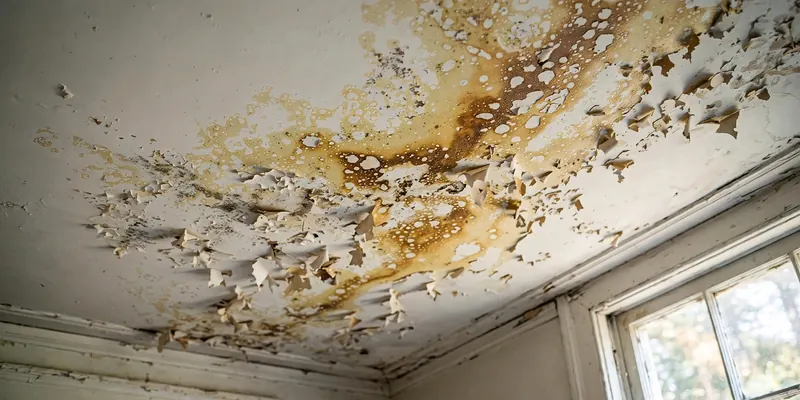
Musty odor, travelling stains, the 48-hour mold clock — why the stain is never where the leak is, and how pros actually track the source.

Real homeowner bills, what a proper detection visit includes, pricing models explained, and the red flags that mark a quote you shouldn't trust.
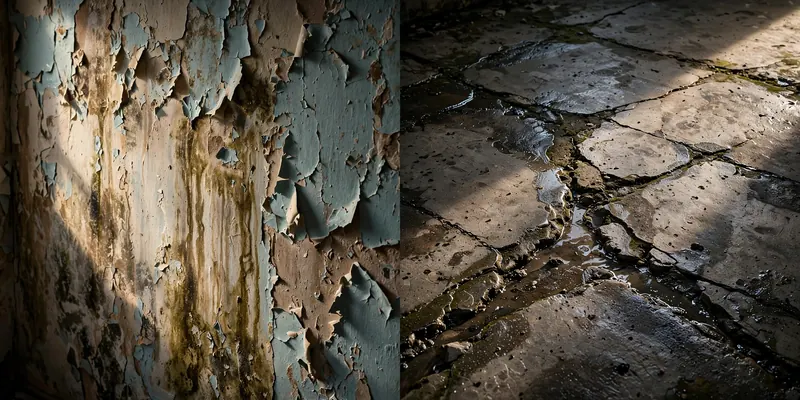
Same water, different hiding spots — symptom comparison, how detection differs, real repair cost bands, and the New Jersey foundation reality check.
Exactly what our process is built to avoid. Acoustic sensors hear leaks through plaster and brick, thermal cameras see temperature differences behind walls, and moisture meters map how far water has traveled — all with zero demolition. We mark the precise spot, so only that spot gets opened.
The national figure for a professional detection visit is $150 to $400 (Angi, 2026 data) — pinpointing, not repair.Pricing comes quoted upfront, before any work begins. When comparing quotes, use leak-detection-only ones, and weigh them against the national average water-damage claim of about $15,400.
Given Merchantville's mature street trees and old clay laterals, roots are one of our first checks, and the intrusion gets located precisely so only that section needs work.
Inside plaster-and-lath walls, water migrates and shows up far from the source.Thermal imaging and moisture meters let us trace the moisture trail back instead of chasing the stain.
Yes, it is the best first test.Turn off every faucet, fixture, and appliance, then watch the meter. Movement with everything off tells you water is leaving your system somewhere — that's when you call us.
We dispatch from the Camden area and schedule Merchantville fast — most visits happen same-day or next-day. Call (856) 245-0967.
That's the hidden-leak story we hear most often. Supply-line water often drains into soil or wall cavities where you'll never see it.Your meter gets checked for movement with everything off, then acoustic and thermal tools show us where it's headed.A doubling water bill means water is leaving the meter somewhere — call (856) 245-0967.
Yes — the shops along Maple Avenue sit in the same pre-war buildings as the homes, with the same aging pipes plus restrooms and kitchens that get heavy use.We inspect them with the same non-invasive tools, at hours that suit you.
A leak that keeps running keeps charging — damage first, bill second, both growing daily.Call Leak Fix Pros now and get a straight answer, not guesswork.