
Slab Leak Detection
Warm spots on your floor or a sudden spike in your water bill? We locate leaks under concrete slabs with acoustic sensors and thermal imaging — no jackhammer guesswork.
Slab Leak Detection in Camden, NJCollingswood's historic homes are beautiful — and their plumbing is often as old as the house. Musty closet? Stained ceiling?A water bill that jumped for no reason? We come out with acoustic gear and thermal cameras and find the leak without disturbing the woodwork. Call (856) 245-0967.
The full Camden service menu, in Collingswood:
Warm spots on your floor or a sudden spike in your water bill? We locate leaks under concrete slabs with acoustic sensors and thermal imaging — no jackhammer guesswork.
Slab Leak Detection in Camden, NJWe trace leaks in buried water and main lines between your meter and your home, marking the exact spot so repairs stay small and affordable.
Underground Main Line Detection in Camden, NJDamp patches, bubbling paint, or musty smells? Our moisture scans find hidden leaks inside walls and ceilings before mold takes hold.
Interior Wall & Ceiling Detection in Camden, NJLosing more water than evaporation explains? We pressure-test plumbing and scan pool shells to find pool and spa leaks fast — saving water and chemicals.
Pool & Spa Leak Detection in Camden, NJProtect your building and your tenants. We inspect commercial properties for hidden leaks that drive up utility bills and risk structural damage.
Commercial Leak Detection in Camden, NJWe detect natural gas line leaks and HVAC refrigerant leaks with sensitive electronic detectors. Smell gas? Leave the property and call 911 first — then call us.
Gas & HVAC Refrigerant Detection in Camden, NJOur ultra-sensitive ground microphones hear leaks you can't — pinpointing pressurized pipe leaks under soil, concrete, and asphalt.
Acoustic Leak Detection in Camden, NJInfrared cameras reveal temperature differences caused by hidden moisture, letting us map leaks behind surfaces without opening them.
Thermal Imaging Leak Detection in Camden, NJFor the toughest leaks, we introduce a safe tracer gas into the line and track it to the exact escape point — accurate to within inches.
Tracer Gas Leak Detection in Camden, NJSoggy yard spots or sewage odors? We locate breaks and leaks in sewer lines so you fix the right section the first time.
Sewer Line Leak Detection in Camden, NJActive leak causing damage right now? Call (856) 245-0967 — we prioritize urgent leak calls across Camden, NJ.
Emergency Leak Detection in Camden, NJSummer bill spike but the house is dry? We test each sprinkler zone at the meter, check valves and the manifold, and mark the broken lateral before anyone digs — one small patch of lawn, not a trench across it.
Irrigation Leak Detection in Camden, NJTenant reported a stain, or a bill spiked on one property among many? We pinpoint the leak and document it with a written report, moisture map, and photos your owner or insurer can act on.
Property Manager Leak Detection in Camden, NJEvery service we offer is listed on our home page.
Collingswood's charm is its historic housing — early-1900s twins along the PATCO corridor, Victorian-era homes and brick colonials around Haddon Avenue and Knight Park, most with original plaster walls, hardwood floors, and finished basements. That history is exactly why we're here: the borough's own 2025 housing plan, built on Census Bureau American Community Survey data, reports that 46.5% of Collingswood's homes were built in 1939 or earlier, with the median home dating to 1944. Beautiful to live in, tricky when water gets where it shouldn't: plaster hides leaks far longer than drywall.
We do leak detection Collingswood-wide — from the PATCO station district and the downtown historic district along Haddon Avenue, to the blocks around Knight Park and the Cooper River side streets.Wherever your home sits, the plumbing story is much the same: pipes installed before most of us were born, in homes built to last.
All of Collingswood falls in ZIP code 08108 — most visits scheduled same-day or next-day. Call (856) 245-0967.
Collingswood homes are beautiful — but let's be honest about the plumbing.Plenty still run their original supply lines, and galvanized pipe's lifespan is one most of these homes have already outlived. Pinhole leaks are the classic Collingswood call: a fine spray inside a wall you can't see, slowly soaking everything around it. On a century-old house, one plumber reports, the original galvanized lines are living on borrowed time.
Plaster-and-lath changes the game. Water refuses to drip straight down — it rides the lath and surfaces as a stain rooms from the leak. Open at the stain and you have opened the wrong wall; thermal imaging traces the moisture trail back to the source instead, which is the whole point of professional detection.
Then the trees. Collingswood's mature street trees look beautiful and treat old clay sewer laterals brutally — roots seek water and force their way in. Slow drains, gurgling, and a soggy patch: the pattern repeats constantly.
Collingswood isn't just old by feel — it's old by the numbers. Census data puts the borough's median year built at 1944, versus 1980 nationally — only four of New Jersey's 415 cities with 5,000+ residents have older housing. The borough's own 2025 housing element, using the Census Bureau ACS data, breaks it down further: 46.5% of homes were built in 1939 or earlier, another 13.2% in the 1940s. Less than 4% of the housing stock is younger than 1990.
Collingswood's population exploded from roughly 1,600 in 1900 to nearly 12,700 by 1930 — the borough was built out as a rail suburb, and the blocks around the PATCO corridor filled in with the twins, colonials, and Victorians still standing today. A century-old house has proven framing; the plumbing inside the walls is usually on its second life at best — or quietly failing on its first.
That combination is why leak detection Collingswood homes need leans so hard on non-invasive tools: in a town this old, you don't get to guess. You diagnose, or you wreck plaster that survived a hundred years.
Here's the math that drives most of our Collingswood calls.Galvanized steel — the supply-line standard in homes built before the 1960s — is good for about 40 to 50 years, per trade sources. Collingswood's pre-1940 homes are 85+ years old.The zinc coat that once shielded the steel wears away from the inside, the steel rusts, flow tightens, and in time the pipe pinholes — a pressurized spray inside a wall that stays hidden until the damage spreads.
Cast-iron drains can run far longer — the National Association of Home Builders puts them at up to 100 years — yet plumbers tell us they've seen them fail at 50.The pipe's underside grooves out as water carves a channel through it, and the joints between sections dry up and crack. A cast-iron stack in a 1925 Collingswood twin is not a young pipe.
Add the clay sewer laterals underneath: brittle, jointed every few feet, and irresistible to the roots of Collingswood's mature street trees. Intrusion never announces itself — a slow drain today, a sewage backup later.
None of that means your house is doomed. It means a 100-year-old home with original pipes deserves a meter check twice a year — and a professional look at the first sign of trouble, not the tenth.
Your water isn't supplied by a big private utility. The Borough of Collingswood Water Department runs its own municipal system — seven groundwater wells drilled into the Raritan Aquifer, treated at plants on Highland & Hillcrest and Comly Avenues, and delivered through roughly 50 linear miles of water mains. The system maintains about 6,000 active service connections serving roughly 21,000 people — including Woodlynne and part of Haddon Township.
An older municipal system means older street mains, and New Jersey's freeze-thaw winters are hard on every buried pipe in the borough.When a service line cracks, the leak usually falls on the homeowner's side of the meter — more often than people expect.Try the meter test yourself: shut off every faucet and fixture, then watch the meter — movement means water is leaving your system somewhere. The borough's meters are tested to state standards, so the reading is trustworthy.
Because Collingswood owns its water, the people who know the system are local — when we find a service-line pattern, we can usually tell you whether the street side or your side is the suspect before anyone digs.
Start with the claim, not the visit. Water damage and freezing claims averaged $15,400 each over 2019–2023, per the Insurance Information Institute — and that is the number a hidden leak is quietly working toward. Against it: a professional detection visit nationally runs $150 to $400, averaging near $280 (Angi, 2026 data), and that covers pinpointing the leak, not repairing it. Water damage restoration nationally averages $3,867 (Angi, 2026), while a minor leak caught immediately through early detection runs closer to $450. All national figures — Collingswood publishes no local price list, so we will not invent one.
When you price leak detection Collingswood-wide, compare leak-detection-only quotes.You get the price upfront, before any work begins. In a borough where a 1910 twin can hide a pinhole leak for months behind plaster, a few hundred dollars for a leak detection answer beats five figures for a restoration.
The approach fits the house: nothing opens on a guess. Heat signatures through plaster show where moisture hides, and acoustic microphones hear pressurized leaks through floors and soil.
On the sewer side, precision is what saves the yard: we locate the intrusion or break to one section, so the repair opens that section and not a trench across the lawn. Moisture meters then confirm how far dampness has traveled inside the wall cavities.
You get the source marked, an explanation in plain English, and your woodwork, plaster, and tile left alone. This is what leak detection Collingswood residents book when they want an answer, not a demolition estimate.
What we keep finding in Collingswood:
See two or more of these? Call (856) 245-0967 — in old houses, finding it early beats everything.
A couple in a 1920s twin near Knight Park watched a brown stain spread across their dining room ceiling over a few weeks. Our moisture meters traced the water's path upward — not to the roof, but to a slow shower-valve leak in the bathroom directly above. The acoustic sensor confirmed it: a faint hiss inside the wall where a galvanized elbow had finally pinhole-corroded.
Because we mapped the moisture first, nobody opened the ceiling blindly: one precise cut through the plaster, one replaced valve, one patched square — the 1920s plaster everywhere else untouched. That restraint is the whole job on Collingswood homes.
Every job differs, but the leak detection approach never changes: diagnose first, pinpoint second, dig only where the leak actually is.
Straight answers for Collingswood homeowners — real costs, honest symptom guides, and detection methods backed by what leak pros actually see in the field.
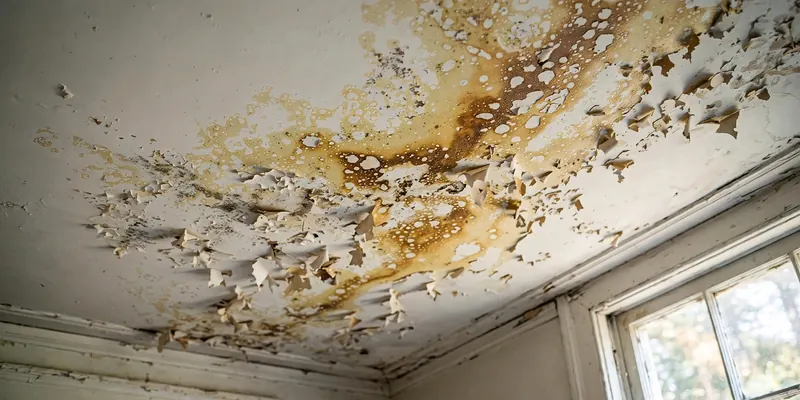
Musty odor, travelling stains, the 48-hour mold clock — why the stain is never where the leak is, and how pros actually track the source.

Real homeowner bills, what a proper detection visit includes, pricing models explained, and the red flags that mark a quote you shouldn't trust.
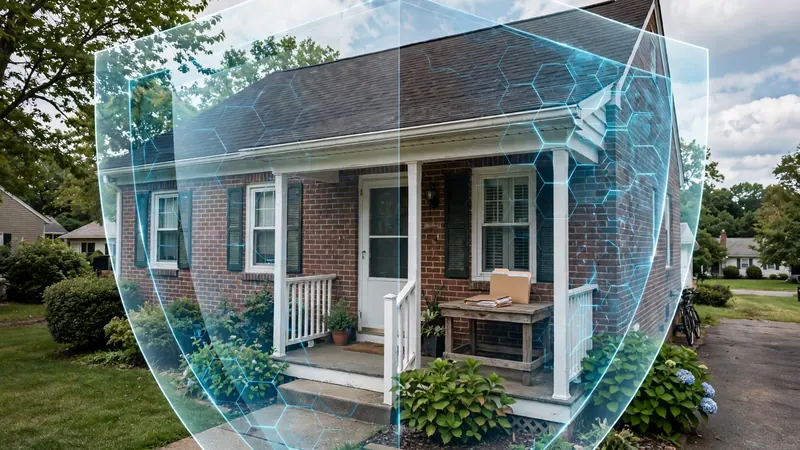
Sudden vs. gradual — the rule that decides every claim — plus real claim numbers, the claims process that works, and NJ-specific rules.
That's the whole point of how we work. Acoustic sensors hear leaks through plaster and brick, thermal cameras pick up temperature differences behind walls, and moisture meters map the water's travel — with zero demolition. We mark one precise spot, and only that spot gets opened.
Nationally, a detection visit typically runs $150 to $400 (Angi, 2026 data) — pinpointing only, not the repair.We quote your pricing upfront, before any work begins. When you shop around, compare leak-detection-only quotes, and weigh them against the national average water-damage claim of about $15,400.
With Collingswood's mature street trees and old clay laterals, roots are near the top of our checklist — and we locate the intrusion precisely, so only that section needs work.
Inside plaster-and-lath walls, water travels and surfaces far from its source.We trace the moisture trail back with thermal imaging and moisture meters, not the stain itself.
Yes — it is the best first test. Turn off every faucet, fixture, and appliance, then watch the meter. Movement with everything off means water is leaving your system somewhere — that's when you call us.
We dispatch from the Camden area and book Collingswood quickly — most visits happen same-day or next-day. Call (856) 245-0967.
It's the hidden-leak story we hear most. A supply-line leak often drains into soil or wall cavities where you'll never see it.We check for meter movement with everything off, then use acoustic and thermal tools to pinpoint where it's headed.A bill that doubles means water is getting past the meter somewhere — call (856) 245-0967.
Yes — the commercial buildings along Haddon Avenue are the same 1900s–1930s era as the homes, with the same aging pipes plus restrooms and kitchens that get heavy use.We inspect them with the same non-invasive tools, booked around your hours.
A hidden leak does not pause, and neither does its bill — every day it runs, the damage grows.Call Leak Fix Pros now for straight answers, not guesswork.