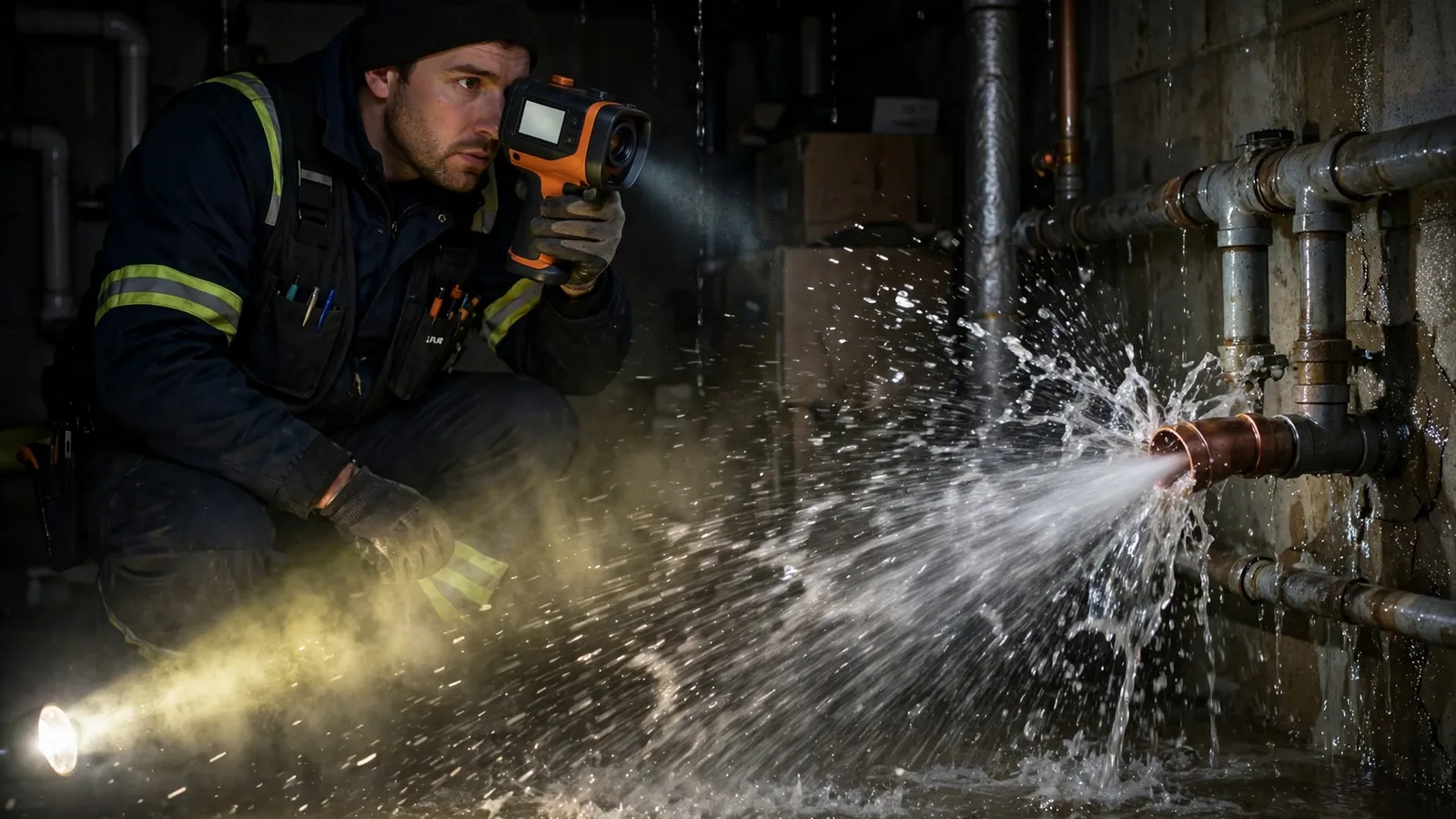
Water's coming in right now and you don't know where from? Then stop reading and call (856) 245-0967 — that's what this page is for. Still here? Here's the rule the pros use: if water is actively damaging your home, or a failure threatens your health or safety, treat it as an emergency and call now. That's the triage rule behind our emergency leak detection service. We're Leak Fix Pros, Camden-based, and emergency leak detection means you jump to the front of the line — a technician with acoustic gear, thermal camera, and moisture meters rolls to you, finds the source fast and certain, and hands your plumber a written diagnosis with zero delay. Every hour water runs, the damage spreads deeper. Don't wait for morning.
What To Do in the Next Five Minutes
Do these while help is on the way — in this order, from restoration pros who do this daily:
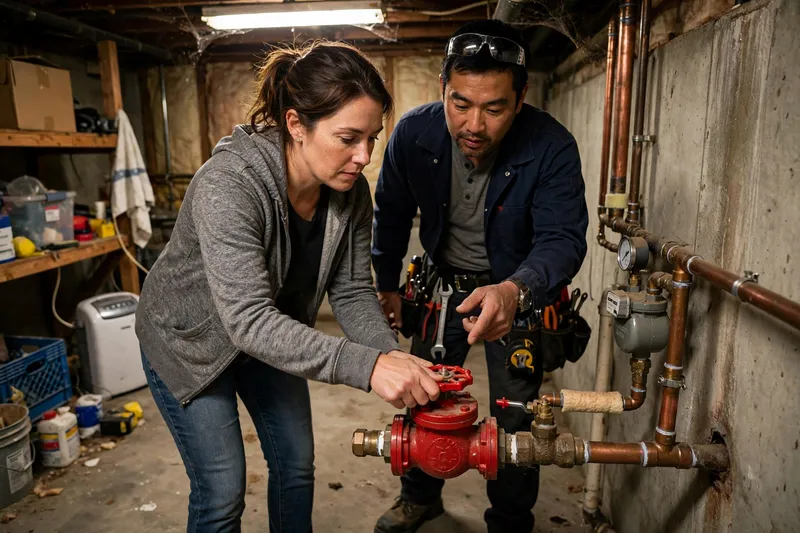
- Stop the water (minutes 0–5). Main shutoff valve, clockwise until fully closed — basement along the street-facing wall, crawl space near the front foundation, utility room, near the water heater, or the meter box outside (a ~$10 meter key from a hardware store opens it). Tag it with something bright today; every adult in the house should know where it is before an emergency. Don't force a stuck valve — a third-generation master plumber warns forcing it can break the valve and "lead to even more significant issues."
- Protect the water heater. Once water's off: gas unit → control knob to "Pilot" or "Off"; electric → switch off its breaker. Heating an empty tank damages burners and elements.
- Kill power to anything wet — carefully. Water near outlets, appliances, or the panel? Flip those breakers. Never walk through standing water to reach the panel.
- Drain the faucets. After shutting the supply, open taps to drain remaining water and relieve pressure — a plumbing expert notes this stops "the damaged pipe from getting any worse, or bursting in another spot."
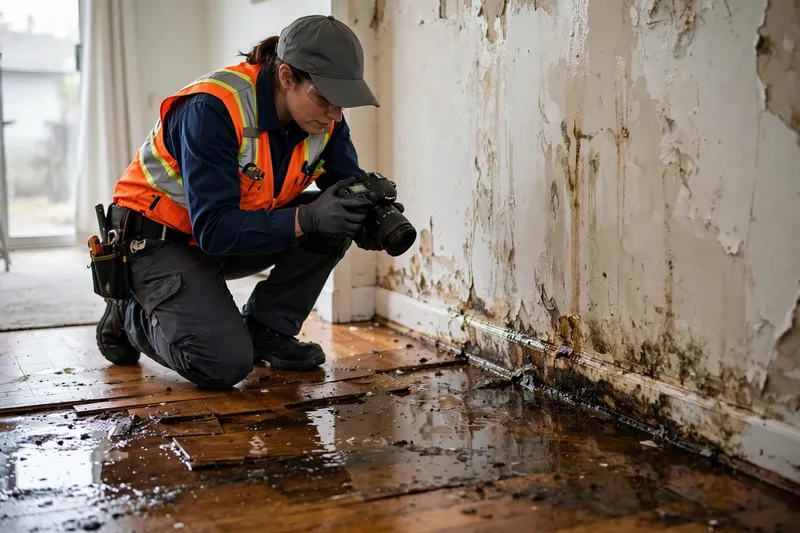
- Contain and document. Move electronics, papers, furniture. Towels and buckets buy time. Photograph and video everything before cleanup — your insurance claim starts with documentation.
- Stop using drains if sewage is involved. Every flush makes a backup worse.
- Bulging ceiling? Put a bucket under it and make a small hole at the lowest point to let water through — municipal guidance says this can prevent the whole ceiling collapsing.
One override for everything above — gas. Smell rotten eggs? Don't call us first. Get out, get to fresh air, call 911 from outside, then the gas utility. Call us after the authorities clear the scene.
What Counts as an Emergency
Direct answer: burst pipe, sewage backing up into fixtures, any leak you can't stop at a shutoff valve, water actively damaging the home, water near the breaker panel, or no hot water in freezing weather with vulnerable occupants — call now. A drip caught in a bucket, a month-old stain, a running toilet when another works — book a regular visit; those can wait for daylight, as long as you can safely isolate them.
A burst pipe is the clearest emergency leak detection call of all: it can dump hundreds of gallons in minutes, soaking floors and ruining drywall. "Just waiting until morning" is what fails. A leak you can't stop at any valve is the other one — "every minute adds to the water on your floor and the mold risk behind your walls." Sewer backup is both an emergency and a health hazard: sewage carries bacteria and harmful gases, and multi-drain gurgling means a main-line problem that "should not sit overnight."
How Fast Damage Spreads
This is why emergency leak detection exists — the clock is real:
- 24–48 hours: mold. EPA, CDC, and FEMA all cite the same window — mold begins growing on damp surfaces within 24 to 48 hours. Dry it in that window or assume mold may be present even where you can't see it.
- ~48 hours: the water gets dirtier. Clean water from a burst supply line (Category 1) degrades to Category 2/3 if left standing — which changes the entire restoration scope under IICRC standards.
- 48 hours is the decision line. Addressing water damage inside the first 48 hours gives the best chance to minimize damage and cost; beyond it, mold, warped subfloors, and weakened structure compound. "Mold remediation costs increase exponentially with delay."
- Standing water over 24 hours, or water in wall cavities → call restoration, not just a plumber.
And the clock starts when the material got wet, not when you noticed — "by the time staining becomes visible, insulation may already be saturated." A slow leak's wetting may have started far earlier than the report suggests.
Emergency Leak Detection in Camden, NJ: Four Jobs We Do First
An emergency visit is four jobs at speed: find the burst, check for the freeze split hiding behind it, get the water off in the first minutes, and document the scene before cleanup erases it. Here is each one.
Burst Pipe Leak Location
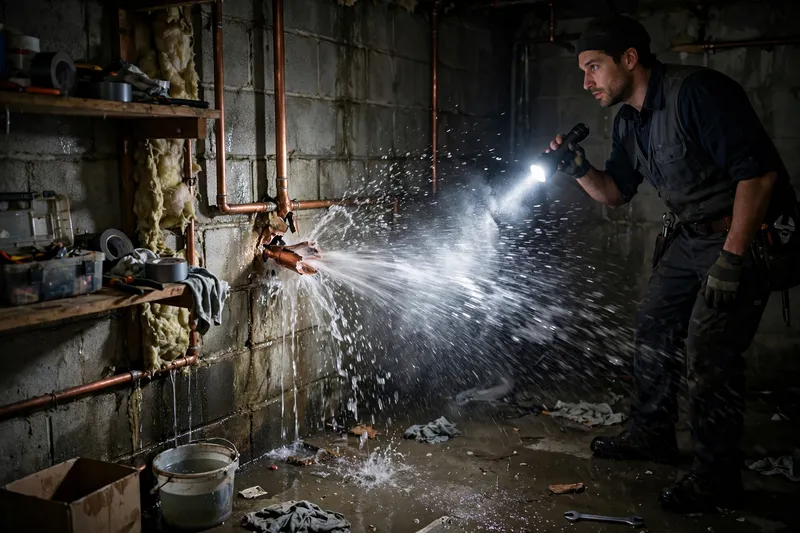
A burst supply line can dump hundreds of gallons an hour, so this job runs at speed: trace the water's path, thermal-scan the wettest zones, and check the usual failure points first. What you get is a confirmed source, not a guess — plus a written summary your plumber can start repairs from with zero diagnostic delay.
Frozen-Pipe Split Location
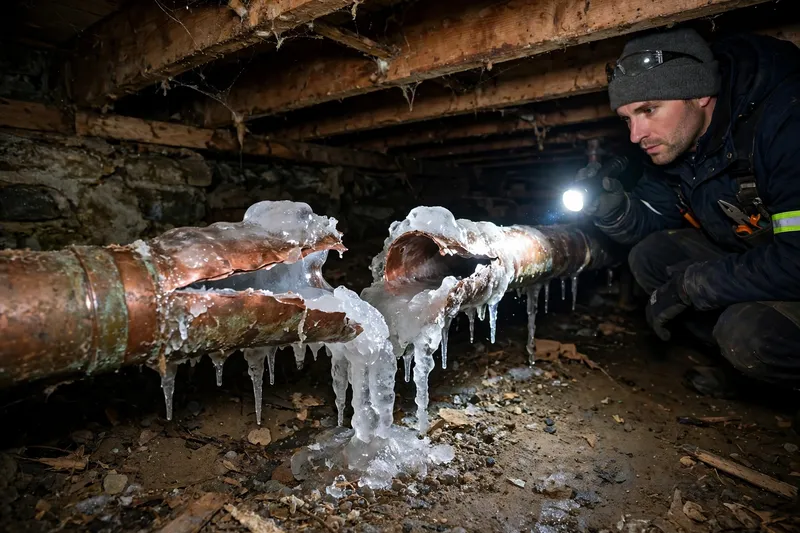
Most of our emergency calls are winter's work — pipes that split in the freeze and announce themselves at the thaw, in the room nobody checks. And freeze damage rarely confines itself to one split. We locate the break you can see, then pressure-test the rest of the run's story, so the second split does not become next week's emergency.
Shut-Off & First-Minutes Guidance
The cheapest minutes of any emergency are the first five, and we spend them on the phone with you: main shutoff first — basement wall, crawl space, or the meter box outside — then the water heater protected, power off to anything wet, faucets drained. Do not force a stuck valve; you can break it and make things worse. Two minutes of triage also means our technician rolls up with the right gear and a plan.
Insurance Documentation Visits
Your claim starts with documentation, and it starts before cleanup, not after. We photograph and record the source and the damage while the evidence is fresh, and our written summary states plainly what failed and when we found it. Policies cover sudden, accidental failures, and adjusters look hard for signs of a gradual leak instead — which is exactly why the record has to be made the same day.
What Emergency Leak Detection Costs When the Call Can't Wait
Published 2026 numbers, national metro data — not Camden prices, but the structure is the same everywhere: a typical emergency invoice runs $300–$800+ (service call $75–$200, after-hours premium $50–$200, labor $100–$200/hr with a 1–2 hour minimum, parts at 2–4× retail). The same repair in business hours: $150–$400 — roughly 40–60% less. After-hours pricing runs about 1.5–3× standard; a midnight holiday call can cost double the daytime rate. Realistic floor for any visit: $150–$250 — "very few plumbing companies will roll a truck for less, even for a five-minute fix." For scale on what's at stake: a burst supply line dumps 400–600 gallons an hour, the average water-damage insurance claim exceeds $12,000, and frozen-pipe claims alone average over $30,000 — one insurer paid $628 million on 20,000+ of them in eighteen months. You'll know our emergency leak detection price before we lift a finger — upfront, emergency or not.
NJ Winters Cause Most of Our Emergency Leak Detection Calls
Camden's housing stock is old — nearly 63% of homes built before 1950, with decades-old supply lines in freeze-thaw country. NJ American Water, in a winter advisory datelined right here in Camden, tells homeowners to: locate and test the main shutoff valve and tag it; wrap exposed pipes; drain irrigation and disconnect hoses; insulate pipes in crawl spaces, garages, and exterior walls; let a small trickle run overnight in deep freezes; open cabinet doors under sinks. If pipes freeze: shut the water off first — "do not attempt to thaw pipes without turning off the main water shut-off valve" — then warm with a hair dryer, never open flames. Away from home: thermostat at 55°F, never lower — "a few dollars saved on heating can turn into thousands in water damage repairs." That's the prevention side; the response side is emergency leak detection at (856) 245-0967. One cautionary pattern from the forums: a homeowner came back to a 34°F house after the furnace died in below-zero weather — and pros note pipes can burst with the thermostat at 50°F inside, because exterior walls radiate the cold. And if the first watering-season bill jumps after a hard winter, the break is often in a shallow irrigation line — see our irrigation leak detection in Camden.
Will Insurance Cover It?
The rule: standard policies cover water damage from sudden, accidental events — burst and frozen pipes, appliance hose ruptures, water heater failures. Gradual leaks "that developed over time and were not addressed" are excluded as maintenance failures. Two things adjusters look for: heavy rust, dry rot, or established mold around a fitting — they're "specifically trained to look for these visual markers" to justify a gradual-damage denial. And the pipe itself is usually yours: "you will have to pay the plumber to replace the actual burst pipe out of your own pocket" — insurance covers the resulting damage, not the failed component. A 2026 Illinois case shows the stakes: an 81-year-old homeowner's burst-pipe claim was denied as gradual wear; the restoration company placed a $17,827.96 lien on her home. Waiting days after seeing standing water to call or file lets an insurer argue negligence — or reclassify a sudden burst as gradual seepage. Act the same day.
How Our Emergency Leak Detection Response Works in Camden, NJ
We triage on the phone. Where's the water? Did you get the main off? Electrical or sewage hazard? Two minutes of questions means our technician rolls up with the right gear and plan. You go to the front of the line — emergency leak detection calls outrank scheduled work, period, across Camden, Cherry Hill, Pennsauken, Gloucester City, Collingswood, and nearby towns. We find it, fast and certain. Tracing the water's path, thermal-scanning the wettest zones, listening for pressurized leaks, checking the usual failure points first — a confirmed source, not a guess. You get clear next steps — exactly where it failed, what happened in plain English, and a written summary your plumber uses with zero diagnostic delay. Managing a rental property with an active leak? Our leak detection for property managers and landlords in Camden, NJ follows the same response — and documents the source for the owner and insurer.
Emergency Leak Detection FAQs for Camden Homeowners
Emergency calls go ahead of scheduled work and we roll as fast as Camden traffic allows. When you call (856) 245-0967, we'll give you an honest arrival window based on where our techs are — straight talk, no fairy tales. What we won't do is promise a minute-count we can't guarantee.
Main valve off, power off to wet areas, valuables moved, photos taken before cleanup. Don't force a stuck shutoff valve — you can break it. And leave the walls alone — we read the water's path better when the scene's undisturbed.
Emergency leak detection after hours costs more than daytime — nationally, emergency calls run about 1.5–3× standard pricing, with a realistic $150–$250 floor for any visit. You'll know our exact price before we lift a finger — upfront on every job, emergency or not. No surprises tacked on after.
Yes — put a bucket underneath first, then make a small hole at the ceiling's lowest point to let the trapped water through in a controlled way. Municipal guidance recommends this; it can prevent the whole ceiling collapsing at once. Then call us.
We're detection specialists — in an emergency that's the fastest route. We pinpoint the source and document it; your plumber starts repairing immediately with zero diagnostic delay. No return trips to 'take another look.'
Yes — maybe especially then. A leak that quits and restarts is usually a failing joint, a cracked pipe shifting with temperature, or a slab leak finding a new path. The water went somewhere, and the damage is still spreading quietly. And remember the clock: mold starts within 24–48 hours whether the leak is currently running or not.
If it was sudden and accidental — a burst or frozen pipe, a ruptured hose — generally yes for the resulting damage (not the pipe itself). If it was gradual, generally no. Document everything with photos before cleanup, mitigate promptly, and file the same day — delay lets insurers argue negligence or reclassify the loss. When in doubt, call us first and your insurer second.
If water's flowing, sewage's backing up, or something's flooding — yes, call (856) 245-0967. Active damage doesn't keep office hours, and neither does our emergency line. A drip in a bucket can wait for morning; anything you can't stop at a valve cannot.