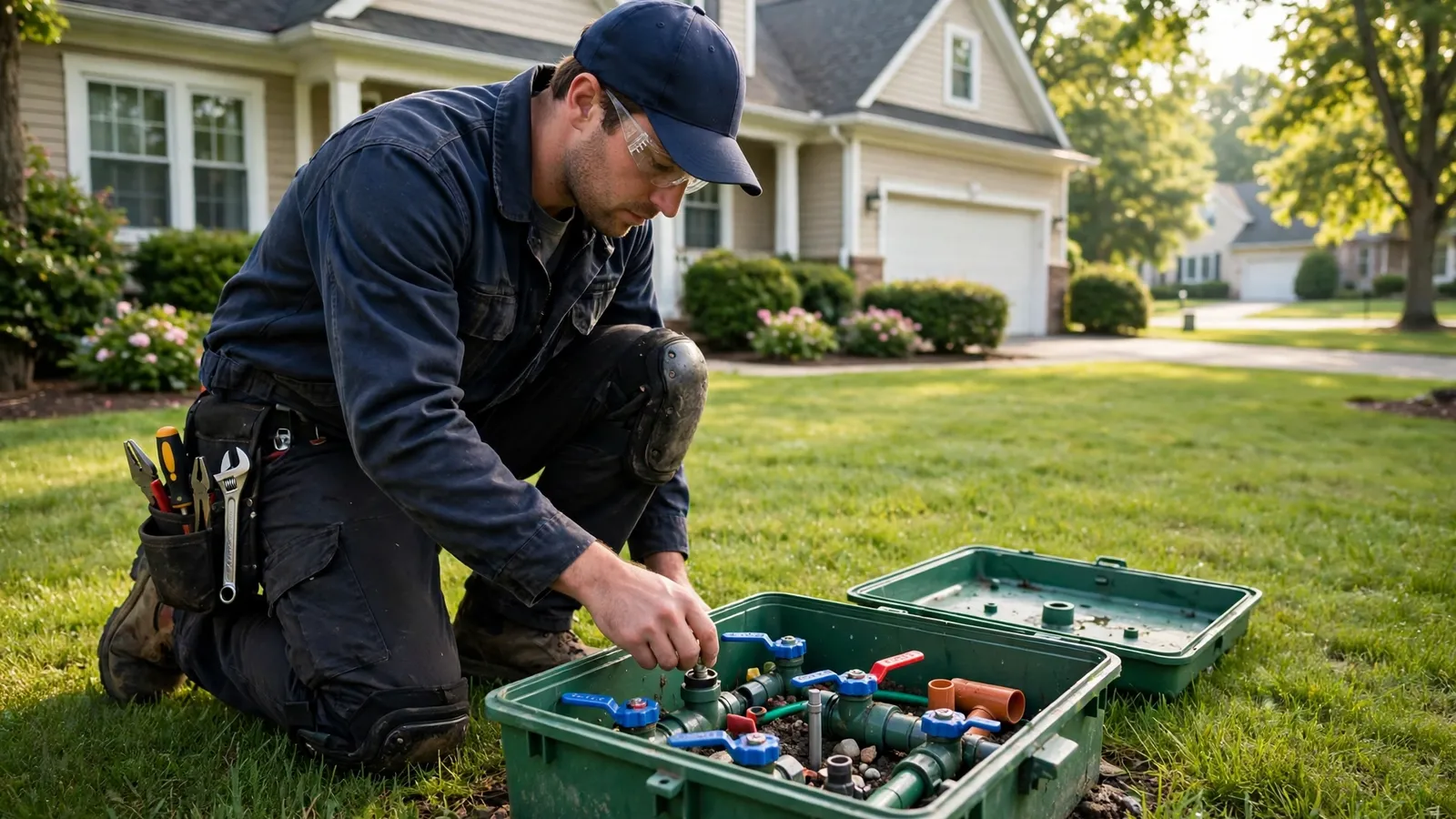
A Camden homeowner's summer bill jumps, but every faucet, toilet, and appliance inside checks out fine. When the house is dry and the bill still climbs, the water is usually leaving through the yard — through a sprinkler zone that runs on a timer, underground, while everyone's asleep. Irrigation leaks are quiet that way: no puddle in the living room, no stain on the ceiling, just a meter that keeps moving and a bill that keeps growing. We find them zone by zone, and mark the break before anyone digs. Call (856) 245-0967.
Signs You Need Irrigation Leak Detection: A Soggy Patch & a Zone Losing Pressure
An irrigation break rarely announces itself the way a house leak does. Watch for these:
- One patch of lawn that is always soggy or noticeably greener than everything around it.
- A puddle that comes back in the same spot a day after watering, in the same place every time.
- One zone with weak, sputtering pressure while the other zones run normally.
- A hissing sound at the valve box or a valve that never fully shuts off.
- Usage outside your watering schedule — flow at hours the controller should be idle.
- Soft spots along a line's path, where escaping water has washed the soil away.
The pattern matters more than any single sign. A break hides inside the increase you already expected from summer watering — each zone still waters the yard, so nothing looks broken from the patio. Compare gallons, not just dollars, against the same month last year: sprinkler homes typically run 30–50% higher once watering season begins, and a leak rides on top of that.
How Irrigation Leak Detection in Camden, NJ Tracks a Break Zone by Zone
We separate the yard from the house first, then walk the system zone by zone until one run of pipe confesses. No trenching on a hunch — the digging starts after the break is marked.
- Split the system at the meter. With the irrigation branch shut off at its valve, we check whether the meter still moves — that one test divides the world into "house leak" and "yard leak."
- Read the pattern. Your bill history and the controller schedule tell us which cycles lose water — often narrowing the search to a single zone before we arrive.
- Zone-by-zone pressure test. Each zone is run and gauged individually. A zone that cannot hold pressure, or sags compared with its neighbors, holds the break.
- Inspect valves and the manifold. Valve boxes are opened and checked: diaphragms that weep, cracked manifolds, and leaking backflow connections are found here more often than in the ground.
- Acoustic pinpoint. For a buried lateral that passes its pressure test nowhere, listening equipment and line tracing mark the break's position on the surface.
- Mark and report. The failed section is marked, photographed, and documented in a written report before any repair is quoted — so your plumber or irrigation contractor opens one precise spot.
What Irrigation Leak Detection in Camden, NJ Covers, Job by Job
A yard leak hunt is four jobs wearing one coat. Here is what each one involves — and why the digging only starts after the break is marked.
Main & Lateral Line Leaks
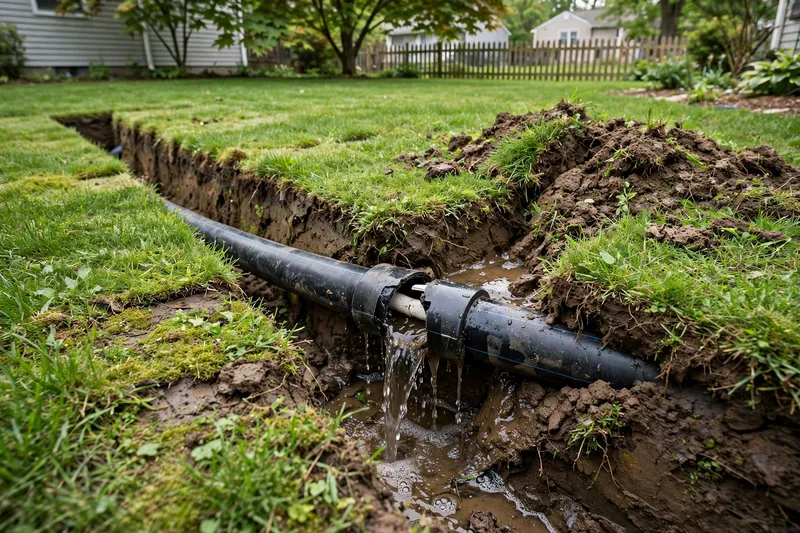
The main feeds every zone; the laterals feed the heads. We split the system at the meter first — irrigation branch shut, we watch whether the meter still moves — then pressure-test run by run until the section that cannot hold pressure names itself. The break is marked on the surface before anyone digs.
Valve & Sprinkler Head Leaks
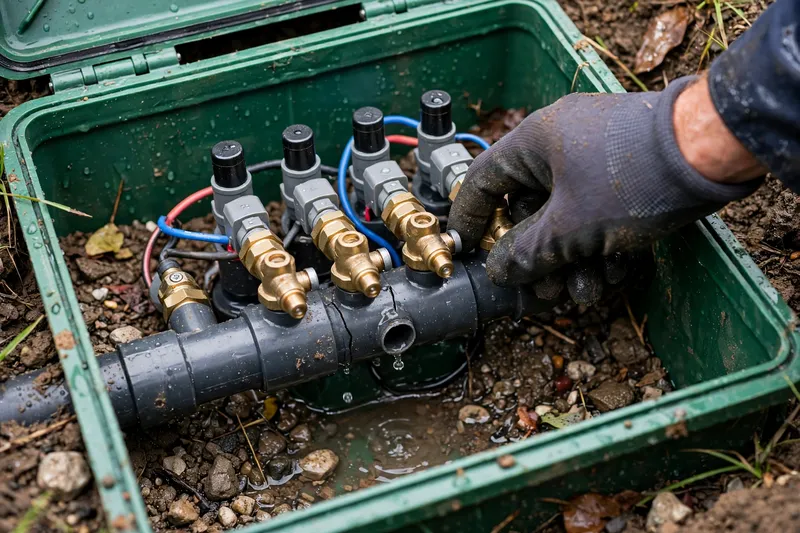
Valve boxes get opened before ground does: weeping diaphragms, cracked manifolds, and leaking backflow connections turn up there more often than in the soil. A valve that never fully shuts off keeps its zone drinking all night — the hissing box and the usage outside your watering schedule give it away.
Zone-by-Zone Isolation Testing
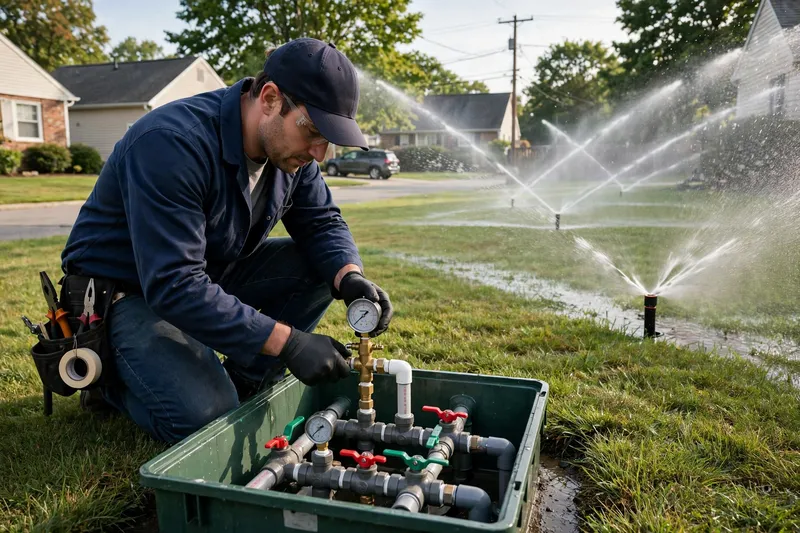
Each zone is run and gauged on its own. A zone that sags in pressure while its neighbors hold steady is holding the break — and comparing gallons against the same month last year, and against the controller schedule, usually narrows the hunt to that one zone before we arrive.
Spring Start-Up Leak Checks
Laterals run shallow, so a line that was not blown out before winter can crack at a joint and wait underground until spring start-up pressurizes it. If the first watering-season bill jumps, we check the zones before you blame the rate — freeze-thaw opens exactly the kind of small crack that runs all season unnoticed.
What It Costs to Find a Break in Your Sprinkler Lines in Camden, NJ
Detection follows our standard visit ranges: most homeowners pay $150–$400 for a standard detection visit, with the average at $280. Simple jobs can run $75–$150; complex hunts can reach $1,000+. The repair itself is quoted separately once the break is marked and we can see its depth and access. Most single-break irrigation repairs are small excavation jobs — a section of lateral line or a valve — not landscape projects. See the full breakdown on our Camden leak detection cost guide.
Irrigation Leak Detection After Winter: Shallow Lines & Freeze-Cracked Joints
Irrigation laterals run shallow, which makes them the first pipes a NJ freeze reaches. Lines that are not blown out before winter can crack at joints and fittings — and the break only shows up as a spring bill spike when the system pressurizes again. If your first watering-season bill jumps, check the zones before blaming the rate: freeze-thaw heaves ground, shifts joints, and opens exactly the kind of small crack that runs all season unnoticed.
Irrigation Leak Detection FAQs for Camden Homeowners
The meter test separates them. Shut off the irrigation branch at its valve while the house supply stays on: if the meter's low-flow indicator stops moving, the leak is in the yard. If it keeps moving, the leak is in the house supply or the underground line. We run that test first on every irrigation call.
Summer watering legitimately raises usage — sprinkler homes typically run 30–50% higher once watering season begins. A leak hides inside that increase. The giveaway is the pattern, not the total: compare gallons (not dollars) against the same month last year, and check usage against your controller schedule. Flow at hours the controller should be idle means water is going somewhere you did not send it.
Yes. We isolate zones one at a time and pressure-test each run, then use acoustic listening and line tracing to mark the break before a shovel comes out. Most irrigation repairs open one small section of soil or turf, not a trench across the lawn.
Then we will find that instead. The same isolation process separates the house supply, the irrigation branch, and the main line between the meter and the house. A main line leak is more urgent than a sprinkler break because it runs around the clock, and we will tell you plainly which one you have before quoting anything.
Detection and documentation is our trade. We find the break, mark its exact spot, and hand you a report your plumber or irrigation contractor can act on immediately. That precise diagnosis is what keeps the repair small — and small stays affordable.
Detection follows our standard visit ranges: most homeowners pay $150–$400 for a standard detection visit, with the average at $280. Simple jobs can run $75–$150; complex hunts can reach $1,000+. The repair itself is quoted separately once the break is marked. See our Camden cost guide for the full breakdown.
Yes. With every fixture inside off, note the meter's low-flow indicator, then run one irrigation zone at a time and watch how the reading behaves. Movement with all zones off points at the irrigation main or a weeping valve; a zone that races the meter far beyond its normal pace usually has the break.
More than most people expect, because irrigation runs on a timer whether anyone is watching or not. Municipal data cited on our high-bill guide puts a 1-GPM irrigation leak at nearly 130,000 gallons wasted over 90 days — and a broken line on a daily watering cycle repeats that waste every single day until it is fixed.