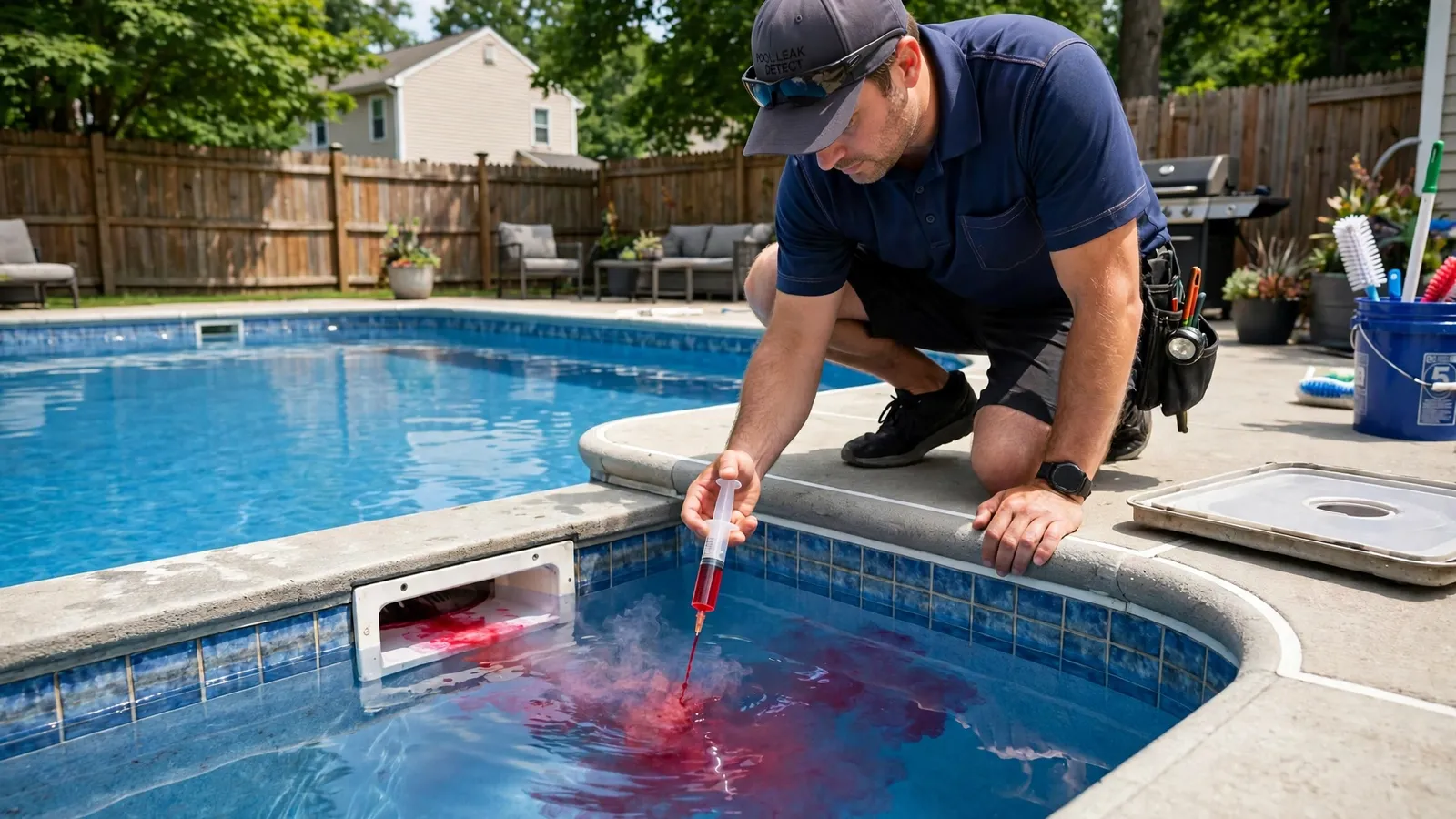
Here's the straight answer: if you're topping off your pool way more than seems right, that's probably not evaporation — that's a leak. Pool leak detection is how we prove it and find it: we confirm the loss is really a leak (not a hot Jersey July), then work an elimination sequence — bucket test, pump-on versus pump-off, line isolation, pressure testing, dye testing — until the answer is specific. You end up with a real diagnosis — a cracked skimmer, a split return line, a bad light seal — instead of pricey guesswork like resurfacing a pool that was never the problem. Call (856) 245-0967 and stop feeding water to a leak.
Pool Leak Detection Starts With the Bucket Test: Leak or Just Evaporation?
Every pool loses water. The question is how much is normal — and the numbers are published: a healthy pool loses about ¼ to ½ inch per day to evaporation in summer conditions. More than an inch a day is abnormal; more than two inches a day is very likely a leak. Heat, wind, low humidity, water features, and heavy use push it up — a heated attached spa adds another ⅛ to ¼ inch a day on its own. Scale check: on a 15,000-gallon pool, a single inch of drop is several hundred gallons. Small daily losses add up fast on the water bill.
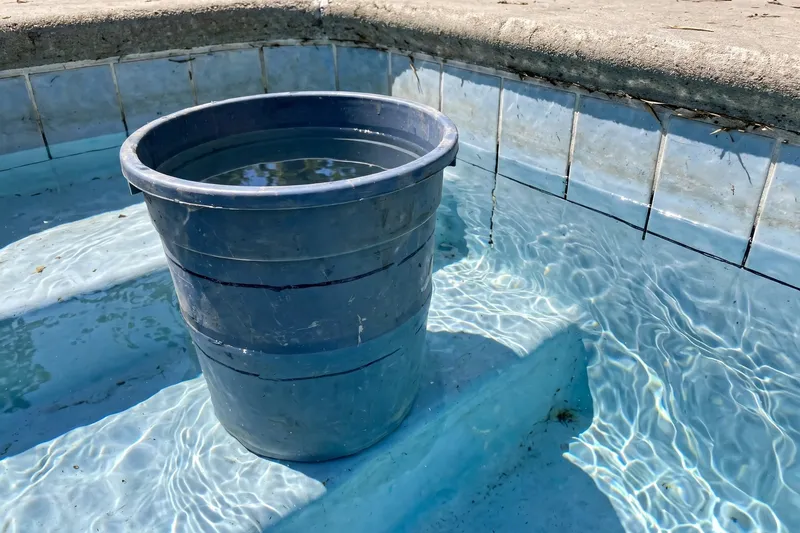
Direct answer: run the bucket test properly — a 5-gallon bucket of pool water on the second step, waterlines marked inside the bucket and on the pool wall, autofill OFF, 24 hours. Pool drops more than the bucket = leak. Equal = evaporation.
Then run it twice — once with the pump ON, once with it OFF. That differential narrows the zone before we ever touch equipment: greater loss with the pump running points to the pressurized (pressure-side) plumbing; the same loss either way points to the structure or gravity-fed fittings — skimmer, light, shell crack, or a return fitting. One pool pro's rule of thumb we use constantly: the leak is where the water stops dropping. Let the level fall and note where it stabilizes — skimmer throat, return jet, light height, liner tear. (Don't let it drop far if the leak may be low — and always turn the autofill off first, or the test is meaningless.)
Where Pool Leaks Actually Happen
Ranked by how often pros find them:
- The skimmer — #1. "The skimmer is the most common," per a Florida leak-detection pro. The joint where the plastic skimmer meets the concrete shell separates over time, especially with ground movement. Often fixable with pool putty.
- Light niches and conduits. The fitting behind the light where it passes through the wall; gaskets deteriorate and water wicks away steadily, hidden behind the fixture where nobody looks.
- Return-line fittings loosen at the wall — usually a gasket replacement.
- The main drain. Hydrostatic relief plugs and valves go defective and weep.
- Vinyl liners tear around fittings, skimmers, returns, cleaner lines, lights, steps, and corners. Minor ones take a vinyl patch kit; badly aged liners need full replacement.
- Gunite and plaster shells. Hairline plaster cracks are often cosmetic; structural gunite cracks are not — "and they are the reason a leak should never be ignored for a season."
- Underground plumbing fails at joints or where a line was nicked during earlier work. A broken line can sometimes be rerouted rather than excavated along its full length — "which is often the cheaper path."
- The equipment pad first. Before anything else: pump, filter, heater, valves — drips, damp unions, cracked valves, crusty mineral staining. Start where it's dry and easy.
How Pool Leak Detection in Camden, NJ Hunts: Pressure Tests, Dye & a Hydrophone
Pool leaks live in two places — the plumbing or the structure — and each needs its own test. Our pool leak detection follows the elimination sequence the pool forums and pros agree on:
- We confirm it. Your water loss weighed against recent weather and usage — plus the bucket test, pump-on and pump-off, if you haven't run it.
- We isolate shell from plumbing. Plug every inlet and outlet — returns, skimmers, drains, cleaner lines — autofill off, mark the level, monitor 24 hours with the pump off. Still losing with the lines plugged? The vessel itself is compromised.
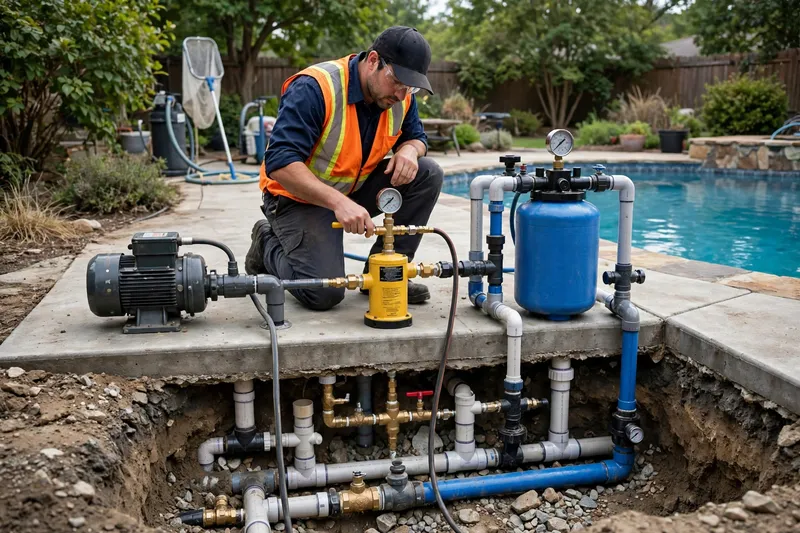
- We pressure-test every line. Each underground run gets isolated and tested alone, with air or water — a line that won't hold pressure has your leak; one that holds is cleared. One caution the pros stress: don't DIY pressure-test old, brittle PVC at high pressure — you can crack it further and turn a small job into excavation.
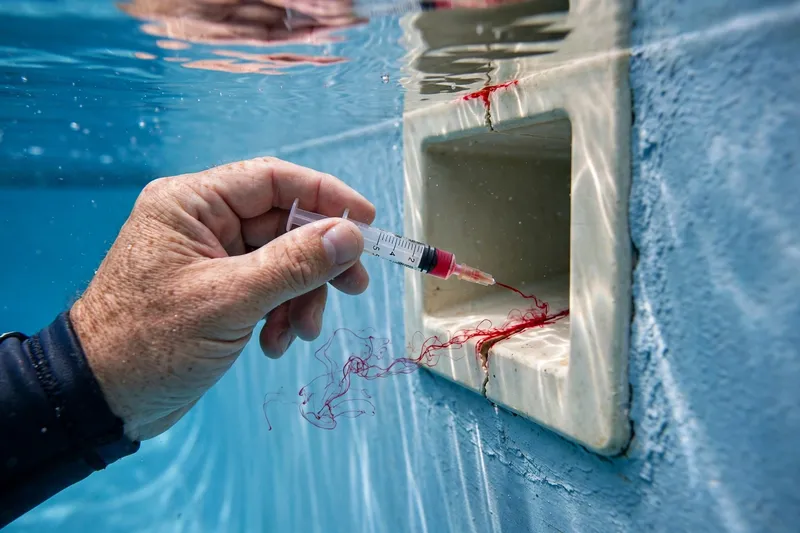
- We dye-test the shell and fittings. Pump off, water dead still, dye injected by syringe right at the suspect fitting — skimmer throat, return, light niche, drain. If the dye gets pulled into a crack or gap, that's the leak, and you watch it give itself away. Non-contact; never touches your finish.
- We listen. A hydrophone — an underwater mic — picks up the turbulence of water escaping through a hole; geophones cover the buried lines. We dig only where the sound peaks.
Because plumbing and structure get tested separately, the answer is specific: the skimmer line, the light niche seal, a shell crack. One pro shop's stated process matches ours: after pool leak detection, "you get a written report of where the leak is and what repairing it involves, before anyone picks up a tool."
What Pool Leak Detection in Camden, NJ Covers, Job by Job
A pool leak hunt is four jobs wearing one coat. Here is what each one involves — and why the answer ends up a specific fitting or line, not a guess with a price tag.
Shell, Skimmer & Fitting Leaks
The skimmer is the most common pool leak we find — the joint where the plastic skimmer meets the concrete shell separates as the ground moves. With the pump off and the water dead still, we dye-test the skimmer throat, the returns, the light niche, and the drain; dye pulled into a crack or gap is the leak giving itself away.
Underground Pool Plumbing Leaks
Every underground run gets isolated and pressure-tested on its own, with air or water — a line that won’t hold pressure has your leak, and one that holds is cleared. Lines fail at joints, or where earlier work nicked them, and a broken line can sometimes be rerouted rather than excavated along its full length.
Spa & Water-Feature Leaks
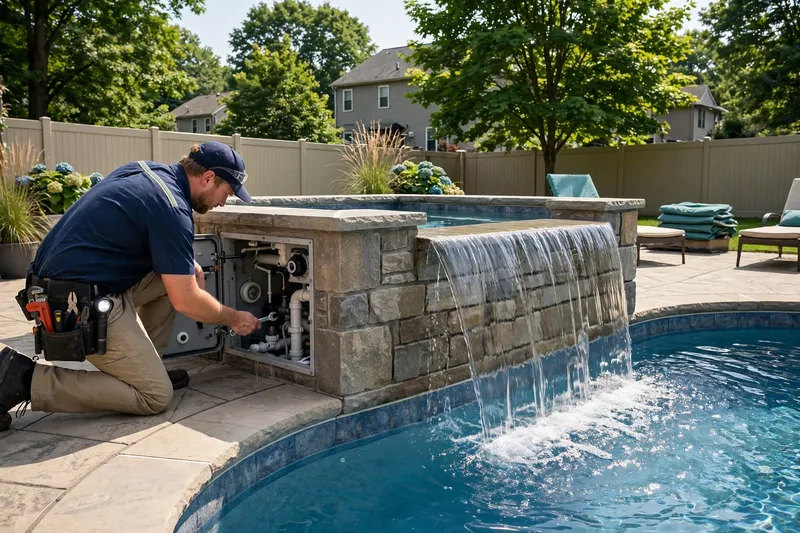
An attached spa is its own suspect: a heated spa adds evaporation of its own — another eighth to a quarter inch a day — while its jets, fittings, and spillway share the plumbing we test. We weigh the loss against the feature’s normal appetite first, then test its lines the same way we test any other zone.
Bucket-Test Leak Verification
Before any equipment comes out, the bucket test separates weather from plumbing: a bucket of pool water on the second step, waterlines marked, autofill off, 24 hours — run once with the pump on, once with it off. If the pool drops more than the bucket, it is a leak, and the on/off pattern already tells us which side to hunt.
What It Costs to Find a Leak in Your Pool Plumbing in Camden, NJ
Published 2026 numbers: Angi puts pool leak detection at an average of $300, with a typical range of $100–$1,000 — inground pools needing deeper work push toward the top end. Repair ranges from ConsumerAffairs' 2026 data: general pool leak repair $350–$1,000; skimmer repair $50–$300; fiberglass liner leak $300–$400; concrete crack about $75 per linear foot; pool light $65–$150 per light. Budget adders that surprise people: excavation, draining, and refilling can add $500–$5,000 to a project. And a reality check from a pool forum: a full skimmer replacement — saw-cut deck, new skimmer, rebar, replaster, deck patch — ran a California homeowner $2,500, with a local pro confirming "$2,200–$2,500 is the going rate… a lot of work and a pain in the butt." Those are national ranges, not Camden prices — but they tell you what "expensive" actually looks like before anyone quotes you.
Pool Leak Detection After a NJ Winter: Freeze-Cracked Skimmers & Split Lines
The freeze mechanism is simple and brutal: water left in pipes freezes, expands, and cracks them — "one of the most frustrating repairs for owners, because it's preventable." Blowing out the lines is the single most important winterization step. Skimmers are the classic freeze casualty: rainwater collects in an unprotected skimmer, freezes, and cracks the housing — standard protection is a skimmer guard (a crushable insert that absorbs ice expansion), plus pool antifreeze in the lines. Come spring opening, cold weather will have caused expansion damage: check for small cracks or separations in skimmer and return pipes and fittings, loose tile and coping, and saturated or eroded soil near the pool — that last one suggests an underground leak that opened over winter. If your pool loses water every spring, winter damage is the first suspect.
Check These Before You Call Us
- Equipment pad walk-around. Drips, damp unions, cracked valves, crusty mineral buildup — the five-minute check that solves a surprising number of "leaks."
- The autofill test. Turn off the pool's main water supply at the backflow preventer, then watch your house water meter: if the meter stops, the autofill valve is the culprit — not the pool.
- The backwash line. Water running out the waste or backwash line while filtering means a leaking multiport valve gasket.
- Note where the water stops dropping before you top it back up — that level is a diagnostic clue.
If none of that explains it, it's time for professional pool leak detection. Call (856) 245-0967 — tell us the on/off pattern, what the bucket test showed, and where the level stabilizes. That information tells us exactly where to focus.
Pool & Spa Leak Detection FAQs for Camden Pool Owners
About a quarter to half an inch per day to evaporation in summer — more with heat, wind, and water features. More than an inch a day is abnormal; more than two inches a day is very likely a leak. The bucket test is the honest check: pool dropping clearly more than the bucket over 24 hours with the pump off and autofill off means leak, not weather.
No, and we'd rather you didn't — draining can damage some pool types. Pressure testing works on full lines and dye testing needs full, still water. Our pool leak detection finds leaks with the pool full.
That's a useful clue — it points to the pressure side (return lines) or a leak that only opens under pressure. Greater loss pump-on versus pump-off narrows the zone before we test a single line. Always mention the on/off pattern when you call.
It's an air leak on the suction side — air getting in, not necessarily water getting out. One pool owner described it exactly: every pump shutoff brought a big whooshing noise and the basket drained completely, needing a re-prime at every start. Root cause was the pump basket drain plug. Another traced chronic bubbles to a single PVC fitting — a few wraps of Teflon tape plus silicone ended it. Small cause, big symptom — but get it checked, because pumps running on air chew through motors and seals.
Easily — and it's one of the most common leaks there is. A failed niche seal or conduit lets water wick away steadily, hidden behind the light fixture where nobody looks. Dye testing makes it obvious in seconds.
Not at all. Pressure testing happens out at the equipment pad, and dye testing is non-contact — just dye released near suspect spots in still water. Your finish never gets touched, stained, or altered.
The leak is at or just below that level — most likely the skimmer throat joint, which is the single most common pool leak. The joint where the plastic skimmer meets the concrete shell separates over time with ground movement. Often fixable with pool putty; a full skimmer replacement is the $2,200–$2,500 job nobody wants.
Most residential pools take two to three hours — depends on how many lines need individual pressure tests and how many fittings need dye. Spas, water features, and multi-pump setups can run a little longer.