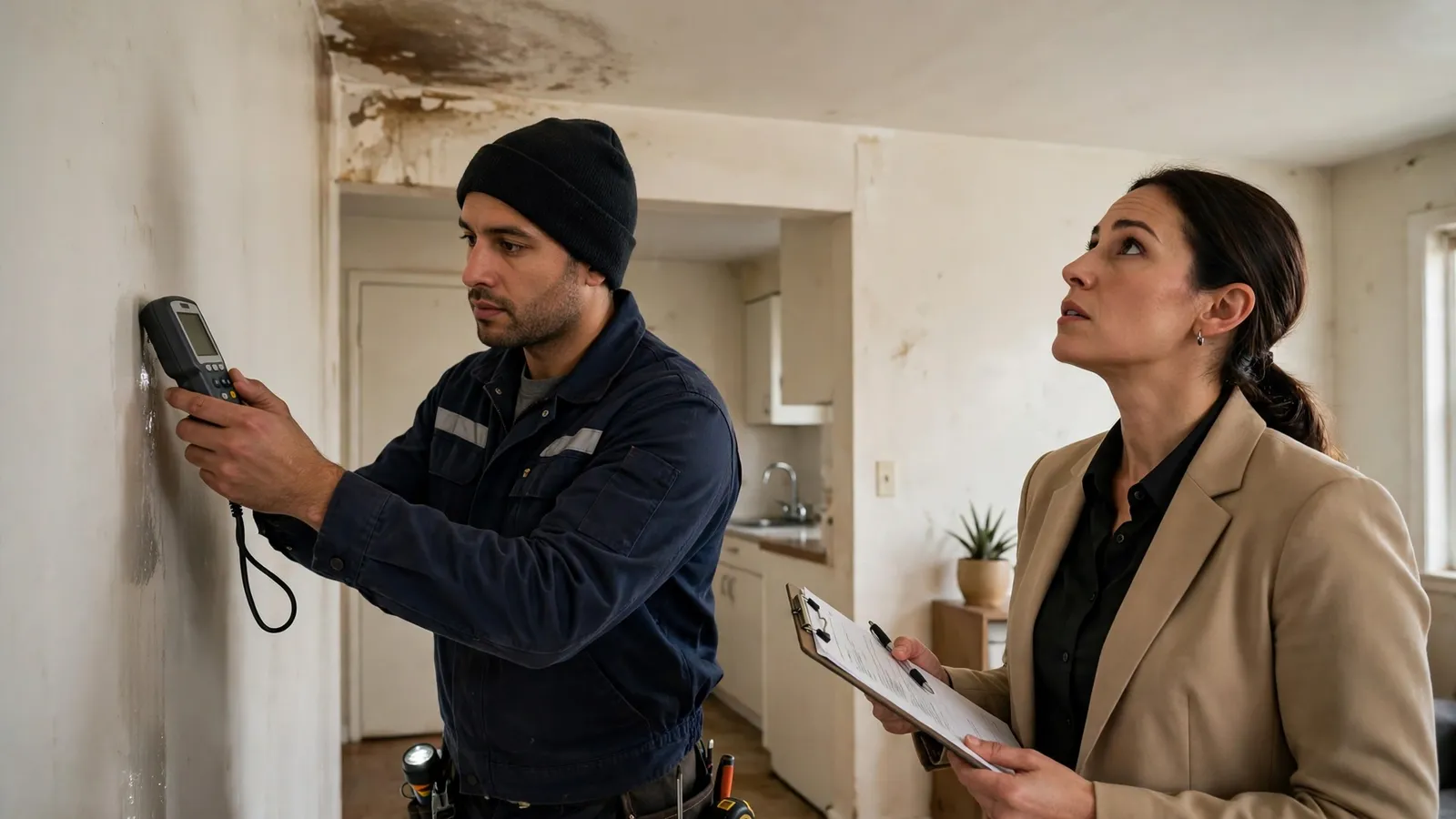
The call comes from a tenant, not from the property. A stain on a ceiling you don't live under, a bill spike on a meter you don't watch daily, a musty smell in a unit you last walked through months ago. For a landlord or property manager, a leak is never just a leak — it's a repair you have to authorize sight unseen, a tenant relationship to protect, and a claim file you may need later. We give you the one thing that settles all three: the exact location, documented. Call (856) 245-0967.
One distinction first: our commercial leak detection page covers commercial buildings — storefronts, offices, retail. This page is for residential rentals: single-family rentals, twins, and small multi-unit buildings across Camden. Different buildings, different stakes, same discipline — find it, mark it, document it.
Why Property Managers Call Us for Rental Property Leak Detection
- Tenant reports are vague by nature. "The bathroom smells damp" or "there's a spot on the ceiling" is all you usually get, and it's rarely the whole story. We translate a vague report into a marked location — the failed pipe, valve, or joint — before you approve any work.
- Bill spikes on one property among many. A spike on a single rental, in a portfolio where you can't watch every meter, needs a fast answer: building supply, unit fixture, or yard. Meter isolation gives it before a wall is opened.
- Documentation for the owner and the insurer. A written report with a moisture map, readings, and photos is what an owner needs to approve a repair and what an insurer needs to pay a claim. We document like the claim is coming — on rental property, it often is.
- Liability and the mold clock. Mold growth begins within 24 to 48 hours of water exposure if the area stays wet, and a dated professional assessment is your defense against the claim that you ignored it. "Tenants forgive the flood. What they remember is being left in the dark" — a calm, dated record protects you twice: with the tenant, and with the insurer.
How Leak Detection for Property Managers Works in a Tenanted Property
- Interview first. We start with the tenant's or manager's account — when it started, what triggers it, where it shows, what's been tried. The leak's history is the cheapest diagnostic tool there is, and on a tenanted property it's usually the only history you have.
- Interior tracing. We read the unit from the inside: stains, baseboards, ceilings below bathrooms. Water travels — the stain is almost never where the leak is — so we follow the moisture, not the complaint.
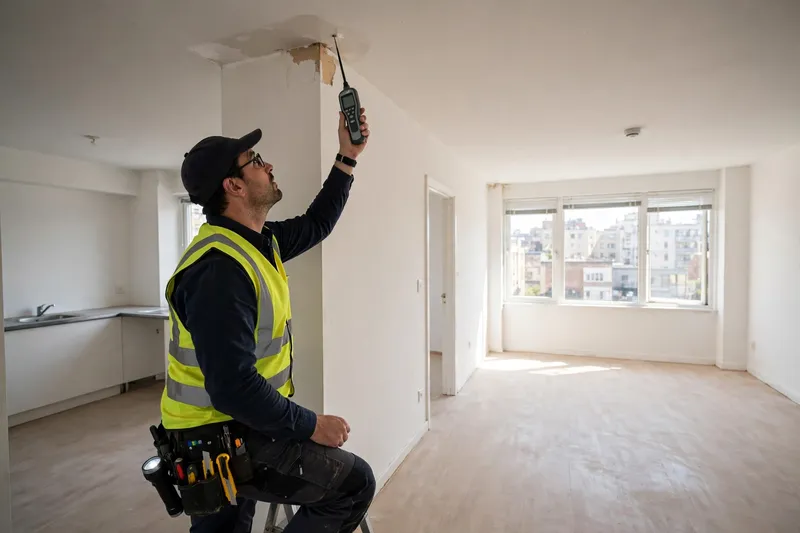
- Instruments as the unit suits. Thermal imaging for hidden dampness, moisture meters to confirm and map, acoustic listening for pressurized supply leaks in walls. No exploratory demolition to "see what's in there."
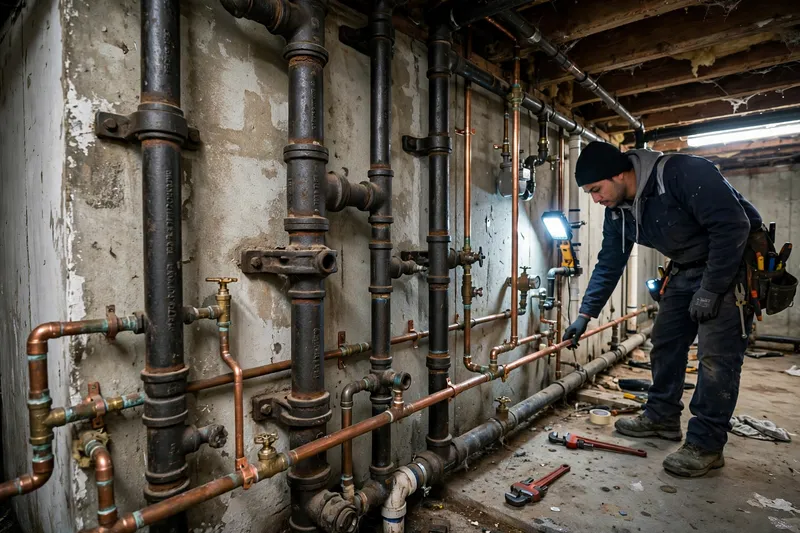
- Report, not just a finding. Marked location, moisture map, readings, photos, and a plain-English report your contractor can act on and your insurer can file. The tenant gets answers; you get a file.
- Booked around access. Visits are arranged with the access details you provide at booking — tenant contact, entry instructions, or a time window that works.
Rental Property Leak Detection in Multi-Unit Buildings: Shared Lines, Shared Blame
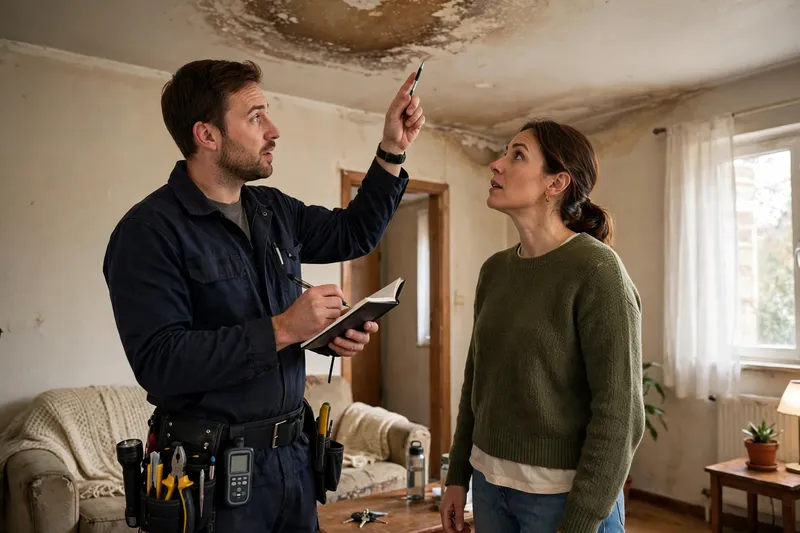
In a twin or small multi-unit, the hardest question is rarely "where is the water" — it's "whose pipe is it." Shared stacks and framing mean a stain in one unit often comes from the bathroom above it or from a shared section neither tenant owns. We trace the moisture gradient and isolate lines until the source unit or shared section is identified, not assumed — because the report that names the failed section is what settles owner-versus-tenant and unit-versus-unit questions. The landlord's policy covers the building — structure, roof, common areas — plus rental-income loss; it does nothing for the tenant's belongings, and who insures leasehold improvements is decided by the lease. Evidence, not argument, is what holds up in both conversations.
What Leak Detection for Property Managers in Camden, NJ Covers, Job by Job
A rental-property visit is four jobs wearing one coat. Here is what each one involves — and why the paperwork matters as much as the pinpoint.
Tenant-Occupied Visit Coordination
Visits are booked around the access details you give us — the tenant contact, entry instructions, or a time window that works. We start with the tenant’s account of when it started, what triggers it, and where it shows, because on a tenanted property that history is usually the only diagnostic history there is.
Shared-Line Responsibility Evidence
In a twin or small multi-unit, the unit with the stain is often not the unit with the leak — water travels along shared stacks and framing. We trace the moisture gradient and isolate lines until the source unit or shared section is identified, not assumed, because the report naming the failed section is what settles whose-pipe questions.
Written Pinpoint Reports for Owners
You get more than a finding: a marked location, a moisture map, readings, and photos, in a plain-English report an owner can approve from and an insurer can file. We document like the claim is coming — on rental property, it often is — and the tenant gets answers while you get a file.
Turnover & Pre-Purchase Leak Checks
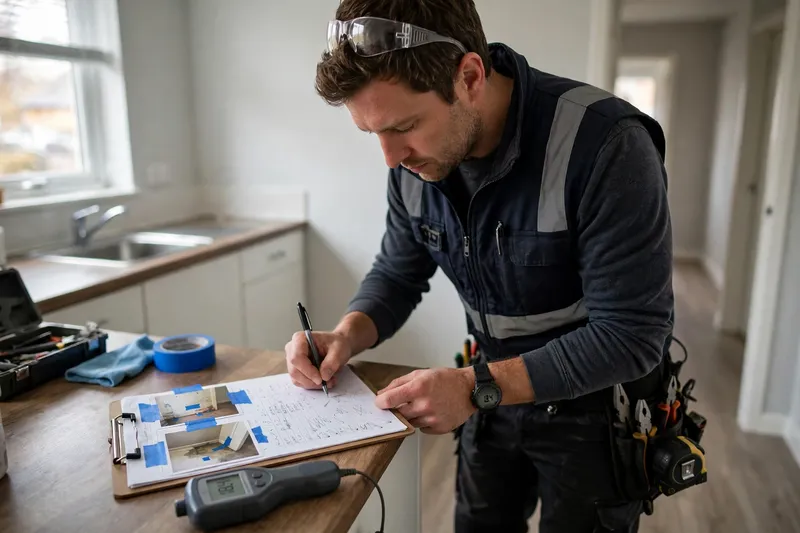
Between tenants — or before a purchase closes — is the cheapest moment to learn what the walls are hiding. We read the unit the way we read a tenant’s report: stains, baseboards, ceilings below bathrooms, meter behavior — and the findings land in the same documented report before the next lease, or the closing, makes them your problem.
What a Visit Costs
Detection follows our standard visit ranges: most homeowners pay $150–$400 for a standard detection visit, with the average at $280. Simple jobs can run $75–$150; complex hunts can reach $1,000+. Pricing is per visit, per property — there is no portfolio rate, and the repair itself is quoted separately once the break is marked. See the full breakdown on our Camden leak detection cost guide.
Leak Detection FAQs for Property Managers & Landlords in Camden, NJ
We prioritize urgent leak calls across Camden, NJ, and an active leak jumps the schedule. We do not promise an arrival window, because the honest answer depends on the day's board — but a tenant report with active water is treated as urgent, not routine.
Yes, and that is the most common reason managers call us. In multi-unit buildings, water travels along shared stacks and framing, so the unit with the stain is often not the unit with the leak. We trace the moisture gradient and isolate lines until the source unit or shared section is identified, not assumed.
A written report with the marked leak location, a moisture map, readings, and photos, in plain language an owner, an insurer, or a contractor can act on. On rental property, the paperwork matters as much as the finding — it is what turns a tenant dispute or a claim into a documented fact.
You book with the access details: the tenant contact, entry instructions, or a time window that works. The visit is arranged around the information you provide at booking, and the technician works from the tenant's account of when the problem started and where it shows.
Meter isolation answers that before any wall is opened. Shutting branches one at a time separates the building supply from unit fixtures and from the yard, so you know whether the loss belongs to the building, a single unit, or an outside line — and you authorize the right repair, not a guess.
Detection follows our standard visit ranges: most homeowners pay $150–$400 for a standard detection visit, with the average at $280. Simple jobs can run $75–$150; complex hunts can reach $1,000+. Pricing is per visit, per property, and the repair itself is quoted separately once the break is marked.
The same problem hits condo and townhome associations with shared systems: one owner's leak becomes the building's dispute. The process is the same — trace, mark, document — and the report settles owner-versus-association questions on evidence: location, photos, and readings.
Call (856) 245-0967. Active leaks jump the schedule, and the first job is stopping the water and documenting the source before drying or repair begins — because the documentation made in the first hours is what the claim file is built on.