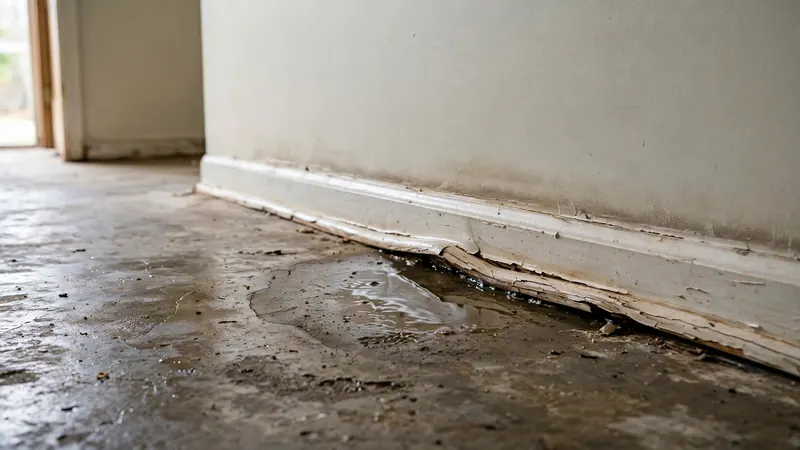
Straight answer: most hidden leaks announce themselves long before you see water. A jumping water bill, the sound of running water with every tap off, musty smells, or a warm patch on the floor are all classic tells. If two or more of these sound familiar, don't wait — here's what each sign means and what to do next.
1. Your Water Bill Jumped for No Reason
This is the number-one clue we hear about in Camden. Same household, same habits — but the bill climbs two or three cycles in a row. A continuously running toilet can waste hundreds of gallons a day, and a pressurized supply-line leak does the same silently underground. Compare your last few bills: a steady upward creep with no lifestyle change is a leak until proven otherwise. Read our full guide on high water bills and hidden leaks.
2. You Hear Running Water When Everything's Off
Stand in a quiet house late at night. Taps off, dishwasher done, nobody showering — and you still hear a faint hiss or trickle inside a wall or under the floor. That's pressurized water escaping where it shouldn't. This is exactly what our acoustic listening equipment is built to chase down.
3. Damp Spots, Stains, or Bubbling Paint
Yellow-brown stains on ceilings, paint that bubbles or peels, wallpaper lifting at the seams — water is traveling inside that wall or ceiling cavity. In Camden's older plaster-and-lath walls, stains can appear feet away from the actual leak, which is why ripping open the stained spot often misses it. Our interior wall and ceiling detection traces it to the source instead.
4. A Musty Smell That Won't Go Away
Musty or earthy odors in a basement, bathroom, or closet usually mean moisture is feeding mold or mildew somewhere out of sight. If air fresheners and cleaning don't fix it within a week, the moisture source is still active — and still damaging framing, drywall, or flooring.
5. A Warm Spot on the Floor
Walk barefoot across the room. One patch of tile or wood that's noticeably warmer than the rest? That's a textbook slab leak symptom — hot water escaping under your foundation and heating the floor above it. Don't ignore this one; hot-side slab leaks can run up both your water and energy bills fast.
6. Low Water Pressure at Fixtures
If pressure drops at one faucet, it's probably that fixture. If it drops house-wide and your neighbors are fine, water may be escaping the system before it reaches your taps. Check with your water utility first to rule out main work on your street — then suspect a leak.
7. Wet Spots in the Yard or a Sinking Patio
Soggy patches that never dry, grass that's suddenly greener in one stripe, or pavers settling unevenly can all point to an underground main line leak. After heavy NJ rain this is harder to read — but a wet spot that persists through dry weeks is telling you something.
What to Do If You Spot These Signs
- Don't start tearing things open. Opening the wrong wall or slab section wastes money and doesn't find the leak.
- Note what you observe — which signs, where, and when they started. This helps us diagnose faster.
- Call (856) 245-0967. We pinpoint the exact source non-invasively, so any repair opens one small area — not your whole wall or floor. And check what leak detection costs in Camden so you know what to expect.