
Slab Leak Detection
Warm spots on your floor or a sudden spike in your water bill? We locate leaks under concrete slabs with acoustic sensors and thermal imaging — no jackhammer guesswork.
Slab Leak Detection in Camden, NJHaddon Township is really a township of neighborhoods — Westmont, Crystal Lake, Cuthbert, Oakdale — and most of its homes went up in the same 1920s–30s wave. Musty closet? Stained ceiling?A water bill that doubled out of nowhere?We arrive with acoustic gear and thermal cameras and locate the leak without disturbing the house. Call (856) 245-0967.
What Camden gets, Haddon Township gets:
Warm spots on your floor or a sudden spike in your water bill? We locate leaks under concrete slabs with acoustic sensors and thermal imaging — no jackhammer guesswork.
Slab Leak Detection in Camden, NJWe trace leaks in buried water and main lines between your meter and your home, marking the exact spot so repairs stay small and affordable.
Underground Main Line Detection in Camden, NJDamp patches, bubbling paint, or musty smells? Our moisture scans find hidden leaks inside walls and ceilings before mold takes hold.
Interior Wall & Ceiling Detection in Camden, NJLosing more water than evaporation explains? We pressure-test plumbing and scan pool shells to find pool and spa leaks fast — saving water and chemicals.
Pool & Spa Leak Detection in Camden, NJProtect your building and your tenants. We inspect commercial properties for hidden leaks that drive up utility bills and risk structural damage.
Commercial Leak Detection in Camden, NJWe detect natural gas line leaks and HVAC refrigerant leaks with sensitive electronic detectors. Smell gas? Leave the property and call 911 first — then call us.
Gas & HVAC Refrigerant Detection in Camden, NJOur ultra-sensitive ground microphones hear leaks you can't — pinpointing pressurized pipe leaks under soil, concrete, and asphalt.
Acoustic Leak Detection in Camden, NJInfrared cameras reveal temperature differences caused by hidden moisture, letting us map leaks behind surfaces without opening them.
Thermal Imaging Leak Detection in Camden, NJFor the toughest leaks, we introduce a safe tracer gas into the line and track it to the exact escape point — accurate to within inches.
Tracer Gas Leak Detection in Camden, NJSoggy yard spots or sewage odors? We locate breaks and leaks in sewer lines so you fix the right section the first time.
Sewer Line Leak Detection in Camden, NJActive leak causing damage right now? Call (856) 245-0967 — we prioritize urgent leak calls across Camden, NJ.
Emergency Leak Detection in Camden, NJSummer bill spike but the house is dry? We test each sprinkler zone at the meter, check valves and the manifold, and mark the broken lateral before anyone digs — one small patch of lawn, not a trench across it.
Irrigation Leak Detection in Camden, NJTenant reported a stain, or a bill spiked on one property among many? We pinpoint the leak and document it with a written report, moisture map, and photos your owner or insurer can act on.
Property Manager Leak Detection in Camden, NJSee the whole service list on our home page.
Haddon Township's center of gravity is Westmont — its downtown on Haddon Avenue, home to most of the township's 15,407 residents — but the township stretches further: Crystal Lake, Cuthbert, and Oakdale, plus the two small exclaves of West Collingswood Heights and West Collingswood Extension. The housing story is consistent across them: homes from the township's big 1920s–30s building wave, with the same aging pipes inside.
We do leak detection Haddon Township-wide — from the Westmont downtown blocks and the Cooper River Park side streets, to Crystal Lake, Cuthbert, and Oakdale.Wherever your home sits, the plumbing story is similar: pipes put in before most of us were born, in homes that were built to last.
Westmont — where most of the township's residents live — falls in ZIP code 08108 — most visits scheduled same-day or next-day. Call (856) 245-0967.
We also serve nearby Camden County towns: Clementon, Audubon, Oaklyn, and Merchantville.
Haddon Township homes are beautiful — but let's be honest about the plumbing.Many homes still have their original supply lines, and galvanized pipe's lifespan is one those homes have already passed. Pinhole leaks are the classic Haddon Township call: a fine spray inside a wall you can't see, slowly soaking everything around it. On a 1920s–30s house, the original galvanized lines are living on borrowed time.
With plaster-and-lath, the stain lies. Water travels along the lath instead of dripping down, so it shows up rooms away from the break. Chasing it means cutting the wrong wall — thermal imaging follows the moisture trail back to the source, and that is the whole point of professional leak detection.
And then there are the trees. The township's mature street trees are gorgeous and absolutely ruthless to old clay sewer laterals — roots hunt for water and crush their way in.Slow drains, gurgling, and a soggy patch: the pattern we see over and over.
Haddon Township is the parent township of half the neighborhood — incorporated in 1866 from Newton Township, it later gave rise to Haddonfield, Collingswood, Woodlynne, Haddon Heights, Audubon, and Oaklyn, each splitting off as its own borough. What remained kept growing, and the numbers tell the story: the township's population jumped from 2,708 to 9,198 during the 1930s, the decade its Westmont-centered housing wave filled in.
Today the township holds 15,407 residents, and Westmont alone — the downtown on Haddon Avenue, with the old Westmont Theater building still standing on the corridor — accounts for 13,726 of them. The township also carries a quieter piece of history: Saddlertown, a historically predominantly Black community that began as an Underground Railroad stop. For leak detection, the takeaway is the era: a township built out in the 1920s–30s has pipes from the 1920s–30s, and those pipes are now the work.
Here's the math that drives most of our Haddon Township calls.Trade sources put galvanized steel pipe — standard for supply lines in pre-1960s homes — at a practical 40 to 50 years. The township's 1920s–30s homes are 90+ years old.The steel's zinc coating erodes from within, rust takes hold, flow constricts, and the pipe eventually pinholes — a pressurized spray inside a wall, unseen until the damage spreads.
Cast iron is the long-lived one — up to 100 years according to the National Association of Home Builders — though plumbers see failures as early as 50.Along the pipe's bottom, flowing water wears a groove — and the joints between sections dry and crack. A cast-iron stack in a 1930s Westmont twin is not a young pipe.
Then add the clay sewer laterals under these properties: brittle, jointed every few feet, irresistible to the roots of the township's mature street trees.Root intrusion doesn't send a warning — it starts as a slow drain and ends as a sewage backup.
None of this spells doom for your house. It means a 90-year-old home with original pipes deserves a meter check twice a year — and a professional look at the first sign of trouble, not the tenth.
Haddon Township's drinking water comes from New Jersey American Water's Western Division, which serves the township in part.The Western system draws from wells in the Potomac-Raritan-Magothy aquifer system, the Delaware River, and the Mount Laurel-Wenonah and Englishtown aquifers, and moves it through a large regional network. "In part" matters: some township addresses sit on other systems, so the first question on any service-line leak is which side of the meter it falls on.
An older regional system means older street mains, and New Jersey's freeze-thaw winters are hard on every buried pipe in the township.A cracked service line usually puts the leak on your side of the meter — something that surprises a lot of homeowners.You can run the meter test yourself: every faucet and fixture off, then watch the meter — if it moves, water is leaving your system somewhere.
Because the system is regional, knowledge of it is spread across the division. Find a service-line pattern and we can usually tell you which side — street or yours — is the suspect, before any digging.
The cheapest version of this story comes first: a minor leak caught immediately through early detection runs closer to $450. The expensive version: water damage and freezing claims averaged $15,400 each over 2019–2023, per the Insurance Information Institute, with water damage restoration nationally averaging $3,867 (Angi, 2026). In between sits the detection visit itself — nationally $150 to $400, averaging near $280 (Angi, 2026 data) — which covers pinpointing the leak, not repairing it. Those are national figures, not township guesses.
When you price leak detection Haddon Township-wide, compare leak-detection-only quotes.The price is quoted upfront, before we start any work. In a township where a 1930s home can hide a pinhole leak for months behind plaster, a few hundred dollars for a leak detection answer beats five figures for a restoration.
We build the visit around the house, not around a hunch — nothing gets opened until it is located. Thermal cameras read heat signatures through plaster to show hidden moisture, and acoustic microphones hear pressurized leaks through floors and soil.
For sewer lines, the goal is a small hole, not a long trench: root intrusions and breaks get located precisely, and the fix targets that one section. Moisture meters confirm the dampness spread inside wall cavities.
You leave with the source marked, a plain-English explanation, and plaster, woodwork, and tile untouched. That is what Haddon Township residents book when they want an answer rather than a demolition estimate.
Patterns we see across Haddon Township:
Notice a couple? Call (856) 245-0967 — in these old homes, early detection wins.
The pattern repeats across Westmont's 1920s–30s blocks: a brown stain spreads across a dining room ceiling over a few weeks, and the obvious suspect — the roof — is innocent. The moisture meters trace the water's path upward, not to the roof, but to a slow bathroom-valve leak on the floor above, where a galvanized elbow has finally pinhole-corroded after ninety years.
Because we map the moisture first, nobody opens the ceiling blindly: one precise cut through the plaster, one replaced valve, one patched square — the old plaster everywhere else untouched. That restraint is the whole job on Haddon Township homes.
Homes differ; the approach does not: diagnose first, pinpoint second, and dig only where the leak actually is.
Straight answers for Haddon Township homeowners — real costs, honest symptom guides, and detection methods backed by what leak pros actually see in the field.

Real homeowner bills, what a proper detection visit includes, pricing models explained, and the red flags that mark a quote you shouldn't trust.
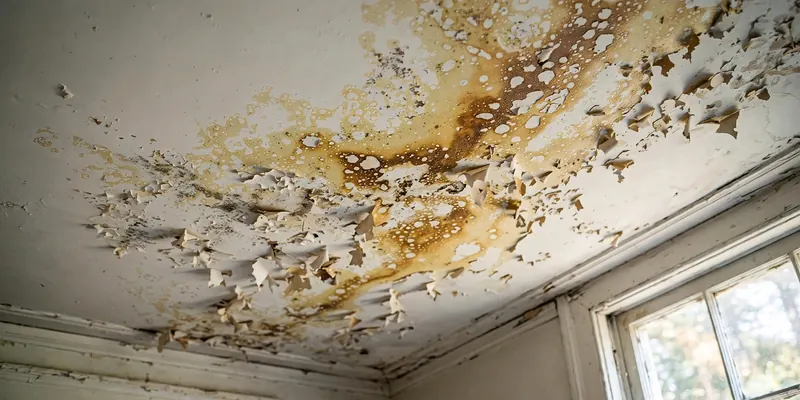
Musty odor, travelling stains, the 48-hour mold clock — why the stain is never where the leak is, and how pros actually track the source.
Sudden vs. gradual — the rule that decides every claim — plus real claim numbers, the claims process that works, and NJ-specific rules.
Our process exists for exactly that worry. Acoustic sensors hear leaks through plaster and brick, thermal cameras see temperature differences behind walls, and moisture meters map how far water has traveled — all without demolition. We mark the precise spot so only it gets opened.
Nationally, a professional detection visit typically runs $150 to $400 (Angi, 2026 data), covering the pinpointing — not the repair. Pricing is quoted upfront before any work begins. If you compare quotes, compare leak-detection-only ones, and weigh them against the national average water-damage claim of about $15,400.
With the township's mature street trees and old clay laterals, it's one of the first things we check — and we locate the intrusion precisely, so only that section needs work.
Water moves inside plaster-and-lath walls and appears far from where it started. We follow the moisture trail back with thermal imaging and moisture meters rather than chasing the stain.
Yes — start there.Shut off every faucet, fixture, and appliance, then watch the meter dial. If it moves while everything is off, water is leaving your system somewhere, and that's your cue to call us.
We dispatch from the Camden area and schedule Haddon Township fast — most visits land same-day or next-day. Call (856) 245-0967.
The most common hidden-leak story we hear, by far.Water from a supply-line leak often drains into soil or wall cavities, out of sight.Our first move is a meter check with everything off, then acoustic and thermal tools to find where the water is going.A doubled bill means water is escaping past the meter somewhere — call (856) 245-0967.
Yes — West Collingswood Heights and West Collingswood Extension are part of Haddon Township, and we serve them like any other township neighborhood. The same scheduling and the same non-invasive process apply.
The longer a hidden leak runs, the bigger the damage and the bill.Call Leak Fix Pros now — straight answers, not guesswork.